

In real life, nobody wakes up excited to clean anything. Not your garage, not your inbox, and definitely not your Salesforce org.
But just like your garage (where that treadmill-turned-laundry-rack lives), your Salesforce setup accumulates clutter over time; unused fields, half-built automations, mysterious reports that no one claims but everyone fears deleting. But eventually, someone says the words that strike fear in every admin’s heart:
“We should probably clean up Salesforce.”
Cue the dramatic music.
Now, to be clear, “org refresh” isn’t an official Salesforce product feature. It’s what we call the structured, strategic process of modernizing your Salesforce CRM—removing technical debt, reorganizing data, updating automations, and aligning Salesforce to how your business operates today, not how it worked three mergers and two admins ago.
And here’s the twist: a Salesforce org refresh isn’t just digital spring cleaning. It’s one of the highest ROI moves a growing business can make—if you know what you’re looking for.
We’ve watched companies transform their productivity, adoption rates, insights, and even team morale simply by giving their Salesforce environment the attention it deserves.
Let’s pull back the curtain on the hidden ROI behind revamping your Salesforce ecosystem.
Act I: The Frankenstein Salesforce Org and the Myth of “It Still Works”
Every company has a version of this story.
Your Salesforce CRM probably launched in pristine condition—clean fields, tidy processes, and dashboards that sparkled.
Fast-forward a few years. New teams. New admins. Customizations layered on top of customizations. And suddenly your once-beautiful CRM looks more like a digital archaeological dig.
Sure, it works, mostly on Tuesdays.
But here’s the real issue: when your Salesforce org becomes a patchwork of historical decisions and conflicting automations, your teams stop trusting it. And when trust goes, so does Salesforce adoption.
Leaders come to us saying, “Salesforce isn’t giving us the insights we need.” But Salesforce isn’t the problem. Your org is simply waving a white flag.
Act II: The Real Cost of Skipping Salesforce Org Maintenance
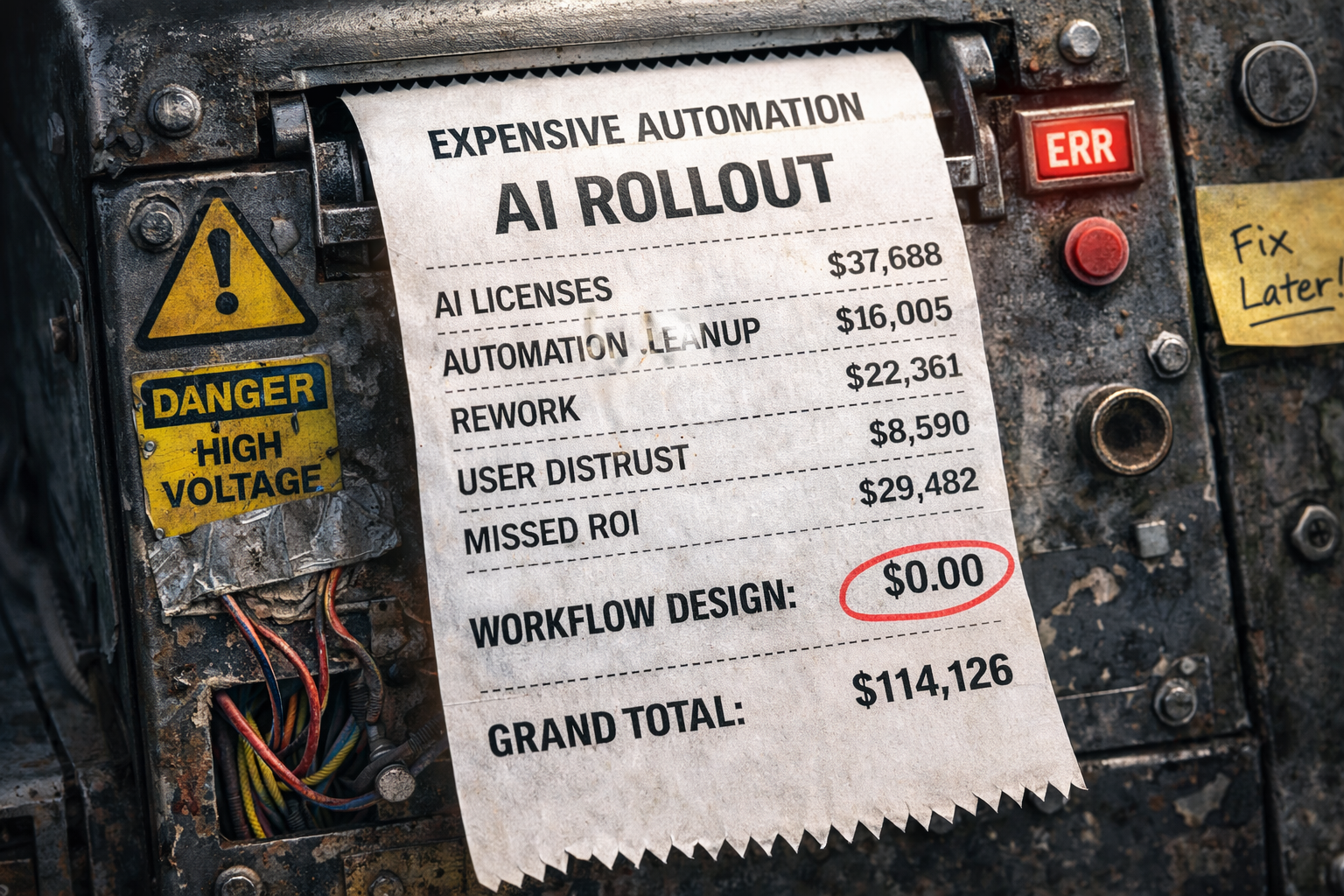
A messy Salesforce org isn’t just annoying—it’s expensive in ways most teams don’t recognize. If you avoid Salesforce org cleanup, you’ll likely end up with one or more of these issues:
1. Slow, Inconsistent Processes
Conflicting automations and outdated workflows slow teams down and create unnecessary rework.
2. Poor CRM Adoption
When processes stop matching how the business actually works, users disengage—and data quality tanks with it.
3. Bad Data = Bad Decisions
If leaders can’t trust reports, forecasting accuracy and strategic planning suffer.
4. Costly Workaround Tools
Shadow spreadsheets, manual data fixes, unnecessary third-party tools—your team invents workarounds to avoid using Salesforce.
5. High Onboarding and Training Friction
Instead of training new hires, trainers become translators for a system that no longer makes sense.
Act III: The 5 Benefits of an Org Refresh
This is where the magic starts.
A Salesforce org refresh doesn’t just clean things up—it creates momentum your business can feel immediately.
1. Cleaner Salesforce Data Drives Better Decisions and Real Growth
There’s a moment after an org refresh when dashboards finally tell the truth.
Forecasts stabilize. Customer journeys make sense. Revenue teams align.
And AI tools like Einstein—especially when powered by the unified customer profiles in Data Cloud (now called Data 360)—start delivering insights you can trust.
Clean data turns your Salesforce CRM from something you maintain into something that propels your business forward.
2. Modern Salesforce Automations Help Your Team (Instead of Haunting Them)
Refreshing your automation layer is like bringing order to chaos.
You retire old assets, rebuild automation using record-triggered Flows, introduce Subflows for consistency, design with Salesforce governor limits in mind, and eliminate conflicting logic.
This is the moment your org stops breaking at 4:59 p.m.
3. Better UX Naturally Boosts Salesforce Adoption (Without Bribing Anyone With Pizza)
When Salesforce finally mirrors how your teams work—fewer clicks, clean layouts, intuitive paths—something predictable happens: People actually use it.
No bribery, no pizza parties required (though always welcome). Just a system that finally works with your users.
4. Clean Salesforce Architecture Improves Every Salesforce Integration
Think of Salesforce integration like connecting a series of bridges. Messy architecture makes those bridges wobble. Clean architecture stabilizes everything.
Marketing, finance, customer service, and enrichment tools sync smoothly, rather than fighting inconsistent fields and object models.
When everything is aligned, you stop asking, “Why is this blank?” And start saying, “Wow. Everything’s finally talking to each other.”
5. The Quiet ROI: Higher Team Morale From a Modernized Salesforce Org
Morale is the ROI nobody calculates on a spreadsheet, but everyone feels.
A refreshed Salesforce org lifts spirits. Sales stops complaining. Support stops apologizing. Leadership stops guessing. And somewhere, an admin finally breathes again.
A modernized org isn’t just an operational win—it’s a cultural reset.
Act IV: The ROI Nobody Talks About—Unlocking Your Salesforce Org’s Future Capacity
There’s a moment after a Salesforce org refresh when everything feels, well, lighter. Not because your team has less work to do, but because the friction is gone. Your Salesforce CRM stops behaving like a maze and starts feeling like a runway. And that’s when the hidden ROI reveals itself.
Because the real value of refreshing your Salesforce org isn’t the cleanup itself, it’s the capacity you create for growth, innovation, and AI-powered selling.
Almost overnight, opportunities that once felt unreachable start appearing on the horizon:
Your sales team experiments with Agentforce Assistant (formerly Einstein Copilot), and for the first time, the AI understands your data instead of misinterpreting it. Your analysts begin using predictive analytics and stop wasting hours massaging spreadsheets. Marketing unlocks smarter engagement scoring, targeting prospects with precision instead of guesswork. Your ops team builds scalable workflows instead of patching together brittle automations. Revenue leaders finally see alignment forming because your Salesforce CRM now aligns with how your business actually runs.
And when someone mentions Salesforce Data Cloud—with its next-generation segmentation, activation, and AI-driven insights—it no longer sounds aspirational. It sounds within reach.
A refreshed Salesforce org doesn’t just make today’s work smoother; it makes the future of your Salesforce integration, AI strategy, and CRM adoption dramatically easier to achieve.
Because when your foundation is clean and modern, your business isn’t just easier to run— it’s easier to grow.
How DSG Approaches a Salesforce Org Refresh Differently
Most partners treat a Salesforce org refresh like a housekeeping project. DSG treats it like a transformation.
We start by listening—understanding the story your org is telling. We trace processes like detectives, uncovering bottlenecks and historical decisions quietly shaping your business. Then the real work begins.
Your refresh becomes part business strategy, part re-architecture, part future-proofing. We build a foundation ready for AI, scale, and sustainable Salesforce adoption.
You don’t just get a cleaner system. You get a more scalable, future-ready business.
Final Scene: Your Salesforce Org Deserves a Fresh Start
A Salesforce org refresh isn’t glamorous—it doesn’t come with confetti cannons or a parade—but it is transformational.
When Salesforce works the way your business works, everything gets easier, from revenue, reporting, and alignment to customer experience, forecasting, and decision-making.
It’s more than cleanup. It’s your business—renewed.



SHARE