

A few years ago, nonprofits everywhere went through the same strange organizational phase. Someone attended a conference, heard a keynote, and came back wildly energized and announced, “We need to modernize.”
Back then, the conversation was about social media. Then it became digital transformation. Then automation. Then CRM optimization. Now? It’s Salesforce AI for nonprofits.
If you work in nonprofit leadership today, there’s a decent chance you’ve already sat through at least one meeting where someone confidently declared that artificial intelligence is about to “completely transform the nonprofit sector.” Which, to be fair, is exactly what people said about cloud CRMs, marketing automation, and digital fundraising.
Some of those predictions were right, and some were aggressively optimistic. Because the truth is, nonprofits rarely need dramatic technological revolutions. They need systems that help overwhelmed teams work smarter without losing sight of the mission. And that’s why the real conversation around nonprofit AI strategy in 2026 has become far more practical than flashy.
The question is no longer: “Should nonprofits use AI?” The question is: “How do nonprofits use AI responsibly, effectively, and inside the systems they already rely on every day?”
That’s where the Salesforce platform enters the conversation. And honestly, that’s where things finally start becoming useful.
What Salesforce AI for Nonprofits Actually Does Well
One of the biggest misconceptions about AI in the nonprofit sector is that it’s arriving as some entirely separate technology initiative. In reality, most nonprofits are already interacting with AI through systems they already use—especially Salesforce.
Over the last several years, Salesforce has steadily expanded AI capabilities through Einstein AI, Agentforce Nonprofit Cloud, Salesforce Flow, predictive analytics, and generative AI functionality available across the Salesforce platform. That sounds exciting, right? But it also might seem slightly overwhelming, because nonprofits are already juggling enough systems, workflows, spreadsheets, grant requirements, donor communications, and operational challenges to make anyone quietly stare into the distance during staff meetings.
The good news is this: Most nonprofits do not need to “become AI companies.” They need their existing technology stack to work better. That’s an important distinction. The organizations seeing meaningful results with Salesforce AI for nonprofits are not necessarily building experimental machine learning models or chasing every new tool trending on LinkedIn.
They’re improving the systems they already depend on.
And for nonprofits already operating inside Agentforce Nonprofit Cloud, AI becomes far more practical because it can work directly within existing fundraising, volunteer management, donor engagement, program tracking, and case management workflows. That’s where the conversation shifts from hype to operational value.

The Real Value of Salesforce AI for Nonprofits Is Surprisingly Unremarkable
Here’s the funny thing about nonprofit AI strategy: The most valuable use cases are usually the least glamorous ones. Nobody gives standing ovations at conferences because a fundraiser saved two hours summarizing donor notes into Salesforce after an event. But that operational improvement matters—a lot.
Picture a development director leaving a fundraising dinner at 9 p.m. with pages of handwritten donor notes, follow-up reminders, and relationship updates that still need to be logged before tomorrow morning’s leadership meeting. That’s not strategic work, it’s operational drag.
Now imagine Agentforce for Nonprofit Cloud helping summarize interactions automatically, organize donor notes, recommend follow-up actions, and surface engagement trends directly inside the CRM. Suddenly, staff spend less time maintaining records and more time strengthening relationships.
That’s where Salesforce AI for nonprofits becomes genuinely valuable. Not because it replaces people, but because it removes friction. The same thing is happening across nonprofit operations teams.
Marketing managers are drafting campaign variations faster; program leaders are reducing reporting overhead through AI-assisted summaries and dashboards; volunteer coordinators are streamlining outreach and communication workflows; and leadership teams are surfacing trends faster with Einstein AI rather than manually digging through disconnected spreadsheets and outdated reports.
And in many nonprofits, the biggest gains are not coming from flashy generative AI tools at all. They’re coming from combining Salesforce Flow automation with AI-assisted processes that quietly reduce repetitive work behind the scenes—things like approvals, notifications, case routing, volunteer coordination, and follow-up reminders.
None of this sounds particularly futuristic, and honestly, that’s the point, because nonprofit organizations rarely need technological magic. They need operational breathing room.
Salesforce AI Readiness Starts with Operational Maturity
Here’s the part of the AI conversation nonprofits are not hearing often enough: AI does not fix broken operations. Instead, it amplifies them. That’s why some organizations experiment with AI tools and immediately see productivity gains. In contrast, others end up frustrated, overwhelmed, and quietly wondering why “digital transformation” somehow created even more manual work.
The difference is rarely the AI itself. It’s operational readiness, because AI inside Salesforce is only as effective as the environment surrounding it. If a nonprofit is operating with disconnected systems, duplicate donor records, inconsistent workflows, unclear reporting structures, and fragmented data, adding AI to the environment usually exacerbates confusion rather than resolving it.
An Einstein recommendation is only as good as the data inside the CRM, an automated Flow still fails if the original process never made sense to begin with, and a dashboard powered by AI still produces unreliable insights if donor data is incomplete or inconsistent. But when organizations have a strong operational foundation—with clean data, connected systems, documented workflows, governance standards, and visibility into reporting—AI becomes something entirely different. It becomes a force multiplier.
The nonprofits seeing the strongest outcomes from AI adoption are usually focusing on foundational readiness first. They’re improving data quality inside Nonprofit Cloud (aka Agentforce Nonprofit), documenting repeatable workflows, strengthening automation maturity with Salesforce Flow, integrating disconnected systems, and improving visibility into reporting and decision-making.
In many cases, organizations are even beginning formal AI readiness assessments before expanding automation or generative AI initiatives across their Salesforce environment. That’s because successful nonprofit AI adoption rarely starts with software; it starts with operational clarity.
This is also where experienced Salesforce nonprofit consulting partners become incredibly important. A firm like Dynamic Specialties Group (DSG) doesn’t simply help nonprofits “implement AI.” The real value comes from helping organizations first optimize the Salesforce environment: streamlining workflows, improving automation strategy, strengthening reporting structures, cleaning up CRM data, and identifying where AI can realistically support fundraising, operations, donor engagement, and mission delivery in scalable, sustainable ways.
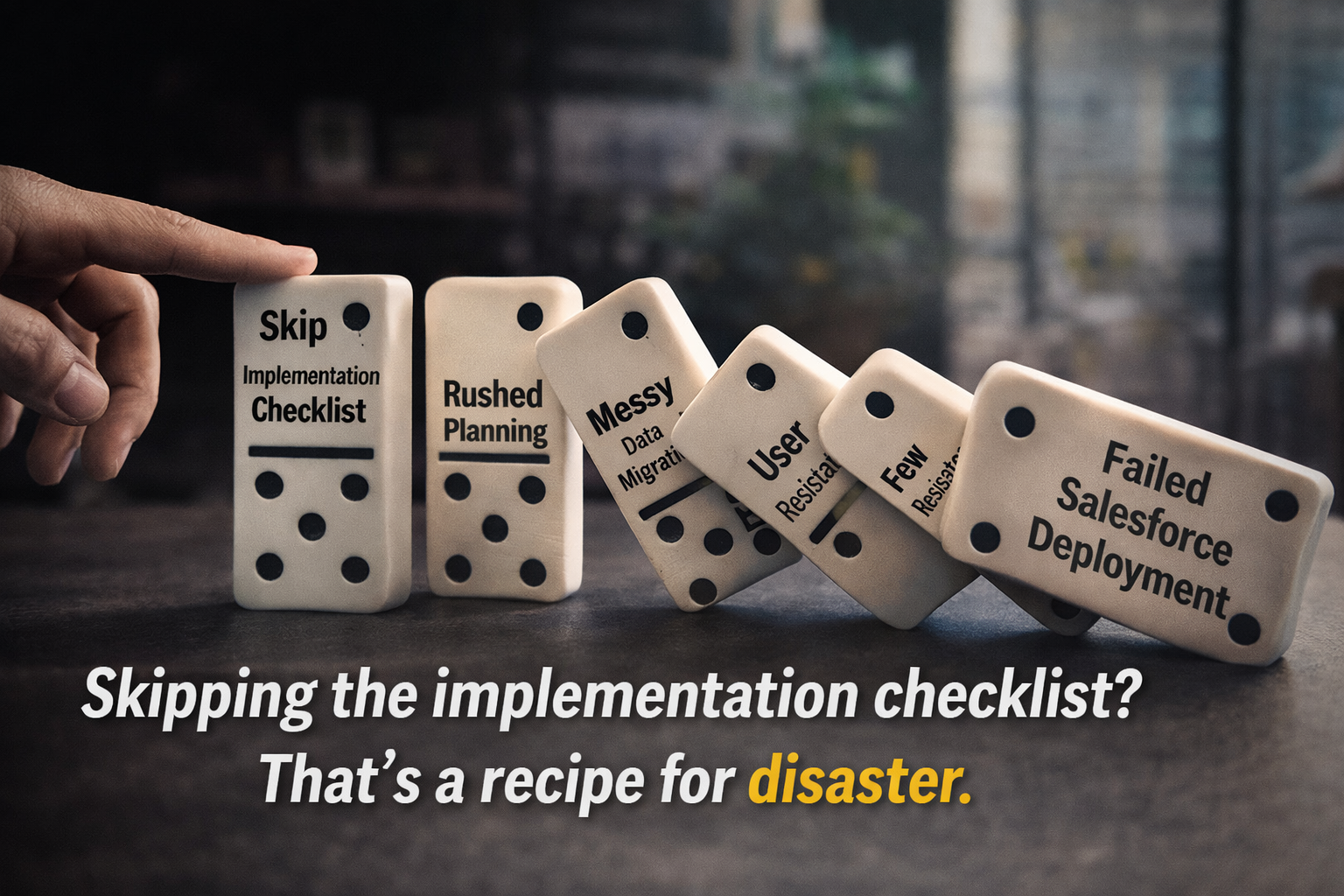
Much of successful nonprofit AI adoption actually starts with nonprofit CRM optimization—improving data quality, workflows, automation maturity, and reporting visibility in Salesforce—because adding AI on top of operational chaos is a little like putting a rocket engine on a shopping cart. Technically impressive? Maybe. Operationally concerning? Definitely.
Why Are Nonprofits Actually Interested in AI
Most nonprofits are not chasing AI because they’re fascinated by emerging technology. They’re chasing relief. Relief from repetitive CRM maintenance, disconnected systems, and spending half the workday updating records instead of serving people. That is where Salesforce AI tools become especially valuable.
When AI capabilities are integrated thoughtfully into fundraising workflows, volunteer management, case management, reporting, and donor engagement processes, they can create measurable operational efficiency without requiring nonprofits to reinvent their entire operation. And that matters because nonprofit teams are overloaded.
The healthiest conversations around ethical AI for nonprofits are not centered around replacing staff. Instead, they’re centered around helping organizations reduce workflow bottlenecks so teams can focus more energy on mission delivery. That is a much healthier conversation.
Ethical AI, Governance & Security in Salesforce for Nonprofits
Of course, the deeper nonprofits move into AI adoption, the more another issue begins dominating leadership conversations: Trust. A corporation can survive a technology mistake, but a nonprofit can lose donor confidence for years. That’s why ethical AI for nonprofits has become one of the most important conversations happening inside the Salesforce world today, especially for organizations handling sensitive constituent information.
Housing nonprofits often manage financial records, disability status, income verification, demographic information, and federally regulated reporting requirements. Human services organizations face similar challenges. Healthcare nonprofits do too. For these organizations, careless AI adoption isn’t simply risky; it can become dangerous.
And this is where Salesforce has increasingly emphasized governance and security as part of its AI strategy, through capabilities such as the Einstein Trust Layer.
Rather than embedding generative AI into workflows without oversight, Salesforce has emphasized permission-based access, privacy protections, data grounding, auditability, and human review processes designed to help organizations use AI more responsibly inside their CRM environment. And that is exactly what nonprofits should be demanding, because nonprofits do not need AI systems that simply move faster; they need systems they can trust.
Of course, even with guardrails in place, AI still carries risk. There’s the growing issue of AI hallucinations—a term that still sounds more like a music festival than a governance concern—and the risk is very real. AI systems can generate inaccurate information with remarkable confidence. A fabricated statistic in a grant proposal, an inaccurate donor summary, or an incorrect case management recommendation can quickly become a very human operational problem.
That’s why the smartest nonprofits are no longer asking: “Can we use AI?” They’re now asking: “How do we use AI responsibly inside our existing systems?”
That subtle shift changes everything, because responsible nonprofit AI strategy is no longer just about efficiency. It’s about governance, compliance, donor confidentiality, operational accountability, and trust stewardship. In all honesty, that’s a good thing.
Salesforce AI for Nonprofit Fundraising: What Actually Works
If there’s one area where AI hype becomes especially dramatic, it’s fundraising. Some vendors speak about AI donor engagement as though algorithms are about to replace authentic human relationships entirely. But the catch is, philanthropy has always been deeply personal. Major donors still want conversations, stewardship still requires emotional intelligence, and trust still matters.
No donor makes a transformational gift because Einstein generated a particularly impressive email subject line. However, can Salesforce AI help fundraising teams operate more efficiently? Absolutely. Agentforce for Nonprofit Cloud and Einstein AI can summarize donor interactions, surface engagement patterns, automate repetitive tasks, assist with communication drafting, recommend follow-up activities, and improve visibility into fundraising activity across Nonprofit Cloud.
Those are meaningful operational improvements, but the emotional core of philanthropy remains human. Ironically, the best fundraisers in 2026 are not the people using the most AI; they’re the people using AI strategically while preserving authentic relationships. That balance matters more than most organizations realize.
Small Nonprofits May Quietly Have the Advantage
One of the most surprising developments in nonprofit technology trends is that smaller nonprofits may actually be better positioned to adapt more quickly than larger organizations. Large nonprofits often carry layers of operational complexity that make change painfully slow: legacy systems, siloed departments, fragmented reporting, disconnected workflows, and approval-heavy governance structures can turn even simple improvements into massive projects.
Smaller nonprofits, meanwhile, can often move faster. They can experiment more easily, adapt more quickly, and implement automation and AI-supported workflows without six months of committee meetings. And because many AI capabilities are now embedded directly into Salesforce Nonprofit Cloud, the biggest barrier is no longer necessarily budget. It’s clarity.
Organizations that understand their operational pain points tend to adopt AI successfully, while organizations chasing trends usually struggle. And that means the real competitive advantage in 2026 may not be technological sophistication at all. It may simply be organizational focus.
What’s Real vs Hype?
The hype says AI will completely reinvent nonprofits overnight. Reality says AI will likely become another operational layer woven directly into the systems nonprofits already use every day, especially Salesforce.
Is AI important? Absolutely. Magical? Probably not. The truth is far less dramatic and far more useful.
Salesforce AI for nonprofits is real when it reduces administrative burden, improves operations, strengthens donor engagement, enhances workflows, supports staff productivity, improves reporting visibility, and helps overwhelmed teams reclaim time for mission-focused work.
It becomes hype when organizations believe technology alone can compensate for weak operations, disconnected systems, poor governance, or unclear strategy.
The nonprofits investing in Salesforce AI readiness today are likely to adapt far more successfully as nonprofit AI capabilities continue evolving. And the organizations that succeed over the next several years probably won’t be the ones chasing every new feature release; they’ll be the nonprofits building strong operational foundations, trusted data, scalable Salesforce environments, and sustainable workflows that support the mission long after the hype cycle fades.
Because mission-driven organizations still run on people, not prompts, and maybe that’s the healthiest perspective nonprofits can carry into the rest of 2026.



SHARE