
If the Salesforce Spring ’26 Release felt like Salesforce quietly tightening the screws on AI governance, automation maturity, and operational discipline, then the Salesforce Summer ’26 Release feels like Salesforce walking back into the room saying: “Oh, good, you survived Spring. Anyway, here’s even more AI.”
Because at this point, Salesforce releases are no longer just software updates. They’re operational evolution events. And the Salesforce Summer ’26 Release continues to push organizations toward a future in which Salesforce AI, Agentforce, Salesforce Flow automation, CRM governance, security modernization, and enterprise operations are increasingly interconnected.
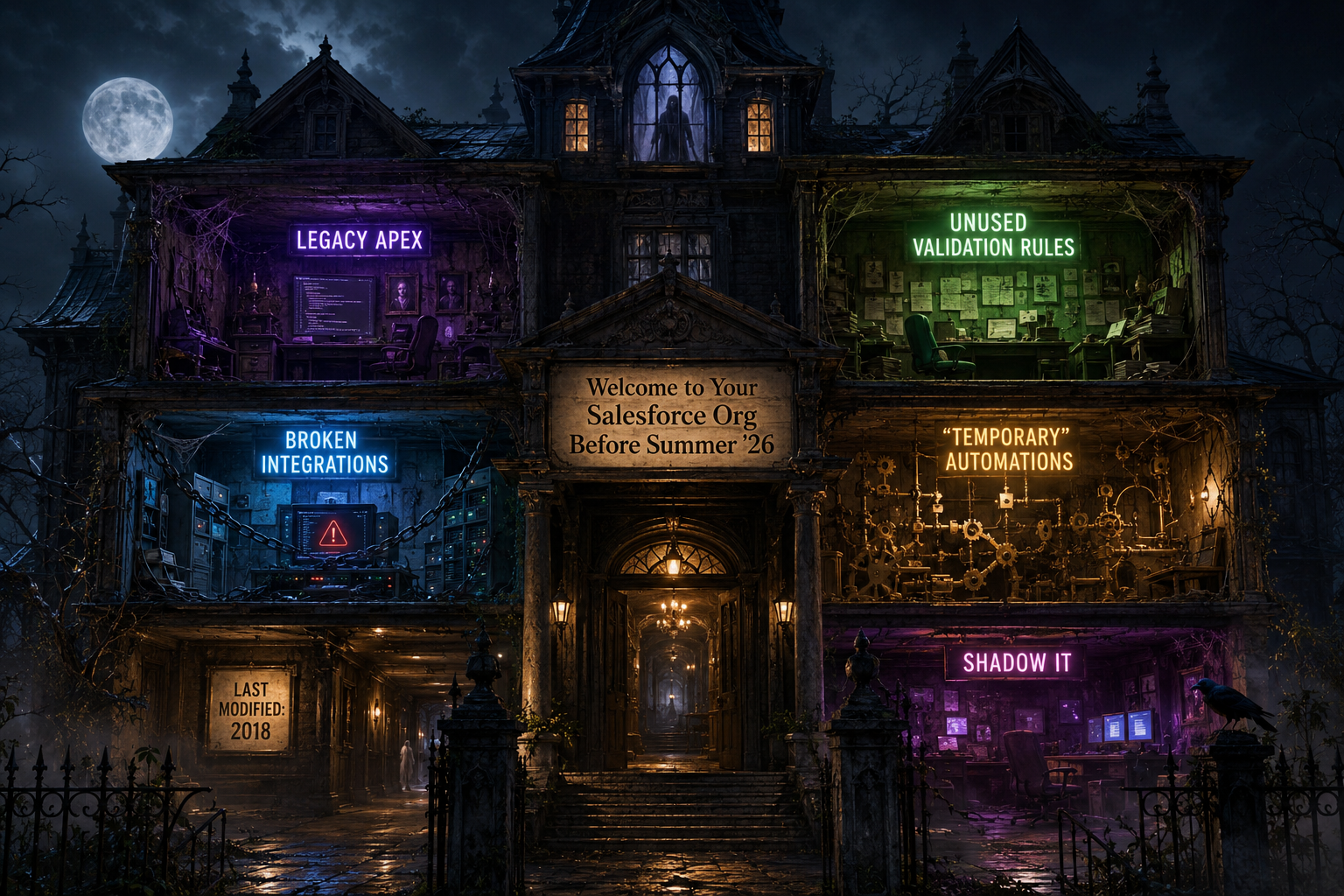
Which sounds exciting. And also slightly exhausting. Especially if you’re the Salesforce admin currently maintaining twelve Flows, four integrations, three approval chains, a nonprofit fundraising process, two managed packages nobody fully understands anymore, and one mysterious Apex trigger everyone is afraid to deactivate because “it still works somehow.”
Welcome to Salesforce in 2026.
The Salesforce Summer ’26 Release continues Salesforce’s broader strategy around AI-assisted operations, intelligent automation, scalable architecture, integration visibility, and platform governance. But underneath all the AI excitement and shiny feature announcements is a larger shift: Salesforce is increasingly rewarding organizations that treat the platform as operational infrastructure rather than simply “the CRM the sales team logs into sometimes.” And honestly? That distinction matters more now than ever before.
Salesforce Summer ’26 Release Dates, Production Rollout Schedule, and Sandbox Preview Timelines
Every Salesforce release has a moment where everyone suddenly realizes the dates are much closer than they thought. That moment usually occurs immediately after someone confidently says, “We still have plenty of time.” For the Salesforce Summer ’26 Release, that moment has officially arrived.
Like every Salesforce release, Summer ’26 follows Salesforce’s phased deployment model, giving organizations opportunities to preview changes, test critical functionality, and identify potential issues before production upgrades occur.
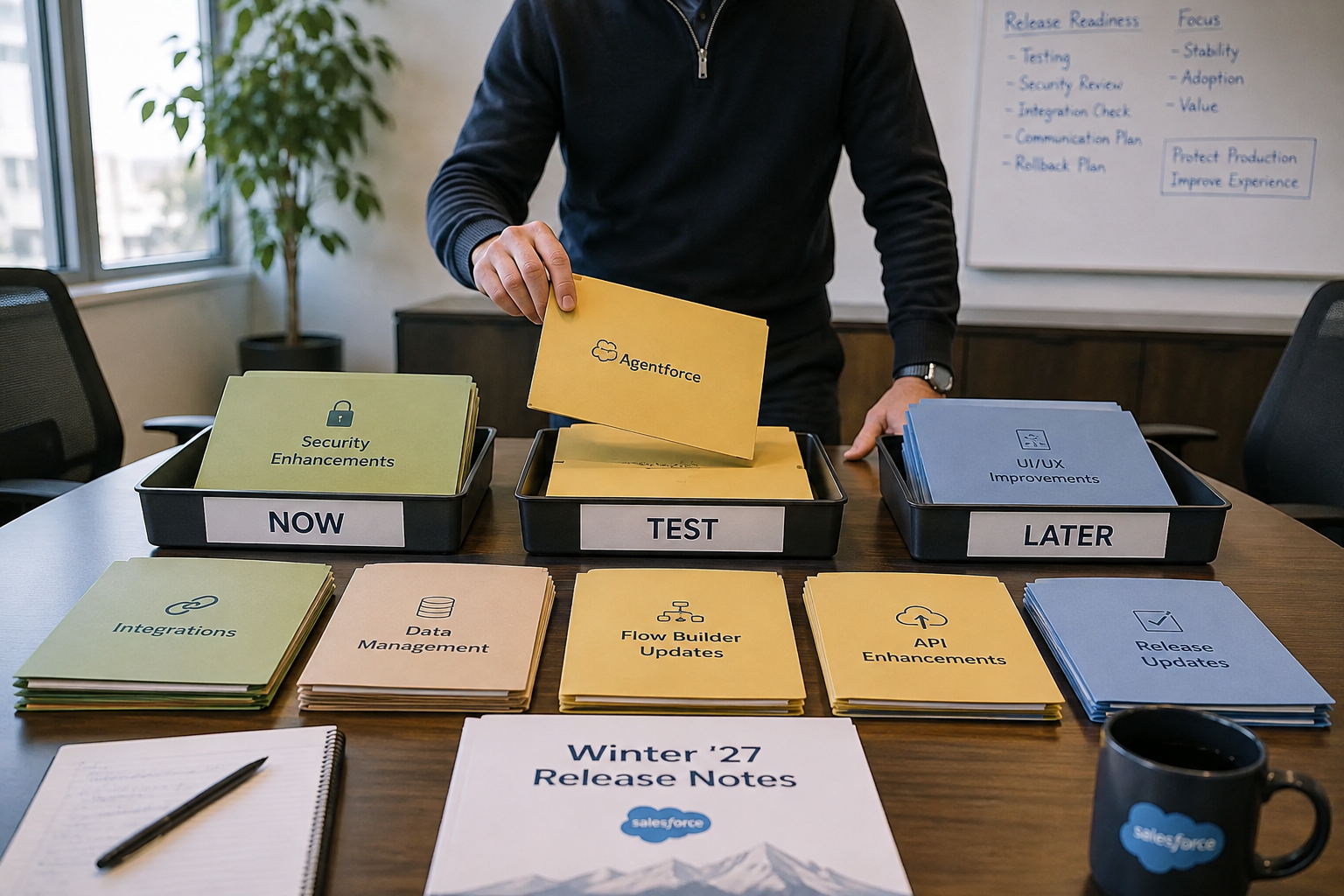
The smartest Salesforce teams have already been reviewing Summer ‘26 Release Notes, refreshing sandboxes, identifying high-risk automation, validating integrations, and planning regression testing long before their production upgrade weekend arrives.
Here are the key dates organizations should have on their radar:
- May-June: Production rollouts are scheduled across May and June, but be sure to check Salesforce Trust for your company’s specific instance.
- May 8–9, 2026: The Sandbox Preview instances were upgraded.
- June 12-13: Salesforce non-preview Sandbox instances upgrade.
And just like every Salesforce release before it, there will absolutely be at least one organization attempting a “small production deployment” directly before their upgrade weekend. May the odds be ever in their favor.
Experienced Salesforce admins know the release weekend itself usually isn’t the stressful part. The stressful part is discovering that a critical integration, Flow, or business process wasn’t tested before the upgrade.
That’s why prerelease orgs and sandbox preview environments remain so valuable. Organizations should use them to validate automations, integrations, custom code, security controls, and mission-critical business processes before production upgrades occur.
Production timing varies by Salesforce instance, and feature availability can differ by cloud, edition, and licensing. Organizations should verify their upgrade schedule through Salesforce Trust and validate functionality directly within official Salesforce Release Notes and preview environments. Because “we assumed it would work the same in production” has historically not been a winning release strategy.
Key Salesforce Updates in the Summer ’26 Release
While every Salesforce release includes hundreds of enhancements, a handful of themes clearly rise to the top in Summer ’26. Unsurprisingly, AI, Agentforce, automation, and operational visibility continue to dominate the conversation. Here are the updates most organizations should pay attention to first.
Agentforce Multi-Agent Orchestration
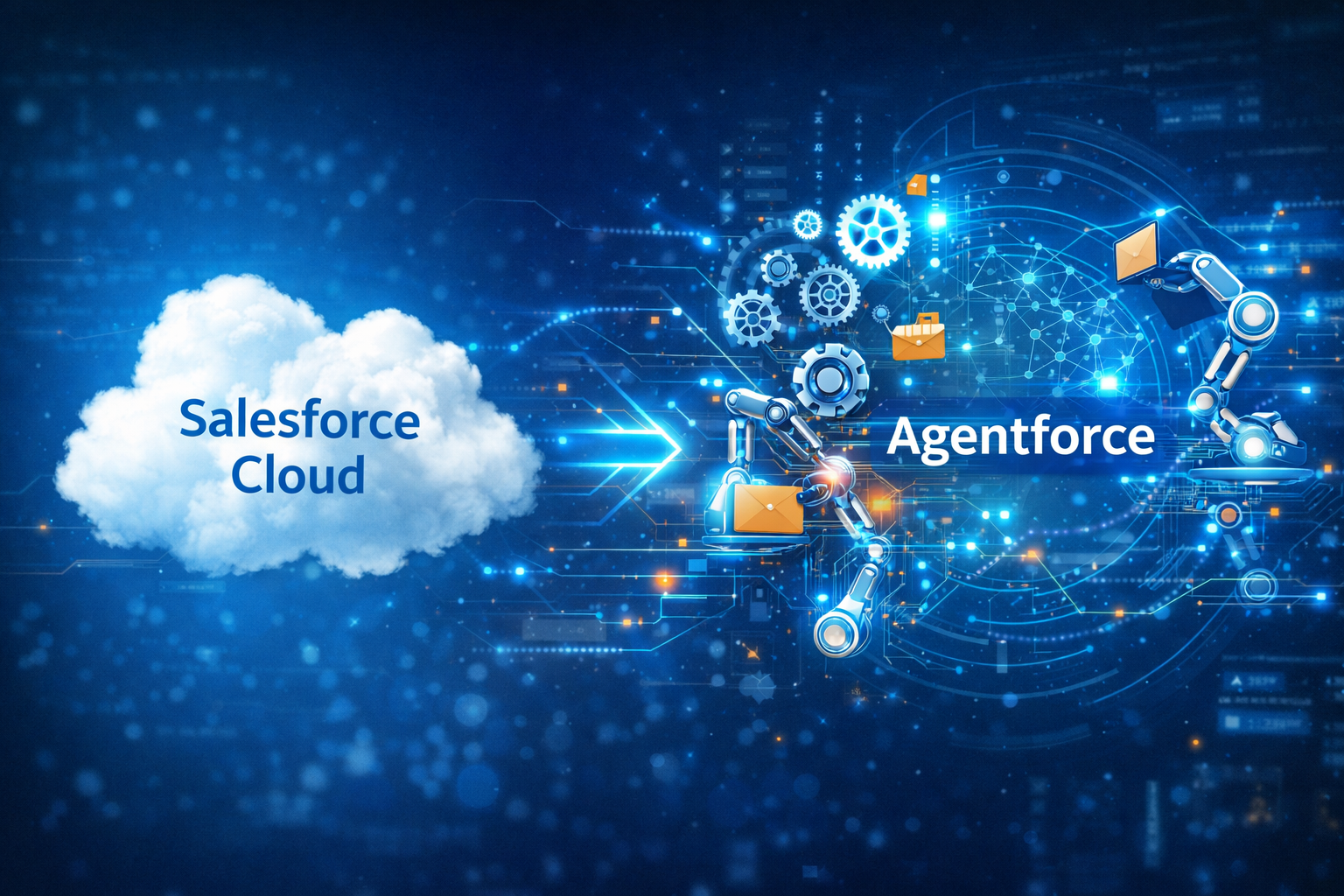
One of the biggest announcements in Summer ’26 is the expansion of Agentforce through Multi-Agent Orchestration. Rather than relying on a single AI agent to complete a task, organizations can now coordinate multiple specialized agents that work together across more complex business processes. Think less "AI assistant" and more "AI team."
New Agentforce Development Tools
Salesforce is introducing new capabilities, including Agentforce DX, Agentforce Vibe IDE, prompt versioning, and testing tools, designed to help teams build, validate, and manage AI agents more effectively. These additions help move AI initiatives from experimentation into more scalable, enterprise-ready deployments. Check the Summer ‘26 Release Notes for more information.
Salesforce Flow Enhancements
Summer ’26 delivers several enhancements for Salesforce Flow, including expanded automation capabilities, improved troubleshooting tools, better visibility into automation health, and AI-assisted development experiences. For admins and architects managing complex automation environments, these updates should make it easier to build, maintain, and monitor workflows at scale.
Stronger AI Governance and Operational Controls
As AI becomes more deeply embedded across Salesforce, Summer ’26 continues emphasizing governance, trust, permissions management, and responsible AI deployment. Salesforce is increasingly providing organizations with tools to manage how AI agents access data, generate recommendations, and participate in operational workflows. For many organizations, AI governance is quickly becoming just as important as traditional Salesforce security and data governance.
Data Cloud and Real-Time Data Activation
Salesforce continues to invest heavily in Data Cloud (aka Data 360), strengthening the connection among trusted customer data, automation, analytics, and AI-driven experiences. This integration remains central to Salesforce’s broader Agentic Enterprise vision.
Slack-First Collaboration and AI Workflows
Salesforce continues to strengthen the connection between Slack, Agentforce, and Customer 360. Summer ’26 expands opportunities for employees and AI agents to work together inside Slack, bringing AI-driven insights and actions closer to where work already happens. As Salesforce continues blurring the line between collaboration and execution, Slack is becoming an increasingly important operational hub.
Platform, Security, and Developer Improvements
Developers and architects will find updates across Apex, Lightning Web Components (LWC), APIs, integrations, security tooling, and AI-assisted development experiences. The focus remains on improving scalability, maintainability, and platform modernization while preserving governance and operational control.
Expanded Updates Across Salesforce Clouds
Beyond the platform itself, Summer ’26 delivers enhancements across Sales Cloud, Service Cloud, Data Cloud, Commerce Cloud, Field Service, Tableau, Revenue Cloud, Slack, and industry-specific solutions. The common thread throughout these updates is improved productivity, deeper automation, stronger operational visibility, and increased collaboration between humans and AI.
Taken together, these updates reinforce the biggest story of the Salesforce Summer ’26 Release: Salesforce is no longer evolving solely as a CRM platform. It's becoming an increasingly intelligent operational ecosystem in which AI, automation, governance, integrations, and data work together to drive business outcomes.
Salesforce AI, Agentforce, and the Changing Role of the Salesforce Admin
At this point, Salesforce AI is no longer arriving cautiously. It’s steadily expanding across more areas of the Salesforce ecosystem.
The Salesforce Summer ’26 Release continues building on Salesforce’s broader investments in Agentforce, AI-assisted workflows, predictive recommendations, conversational experiences, automation support, and operational visibility. But the bigger story isn’t simply that Salesforce is adding more AI. It’s that AI is becoming increasingly embedded in how organizations operate.
Salesforce is integrating AI more deeply into customer engagement, analytics, automation, support experiences, and operational decision-making, moving far beyond simple productivity assistance. AI increasingly influences workflows, recommendations, approvals, customer interactions, and business processes.
As a result, Salesforce admins are increasingly expected to think beyond traditional system administration and act as operational architects who balance automation, user experience, platform sustainability, and organizational readiness.
While Salesforce AI creates enormous opportunities for smarter operations, it also introduces new responsibilities. Organizations need clear expectations around data access, user trust, oversight, and accountability. Questions like “Who validates AI-generated recommendations?” and “Do users understand what the AI is actually doing?” are becoming increasingly common.
The smartest organizations will not necessarily be the ones enabling every AI feature immediately. They’ll be the ones adopting AI incrementally, thoughtfully, and strategically. Successful AI adoption is rarely about enabling features quickly; it’s about operationalizing them responsibly while maintaining stability, security, and business value.
Salesforce Flow Automation and Workflow Management in Summer ’26
There’s a fascinating thing happening inside Salesforce right now. Salesforce Flow is no longer a replacement for legacy automation; Flow already won. Now Salesforce is focused on helping organizations manage increasingly complicated automation ecosystems without emotionally collapsing during troubleshooting calls.
The Salesforce Summer ’26 Release continues Salesforce’s broader investment in automation visibility, orchestration support, reactive user experiences, debugging improvements, and AI-assisted workflow design. And honestly, Salesforce admins need all the help they can get because many Salesforce orgs now operate automation ecosystems that resemble urban infrastructure projects more than CRM workflows.
Some Flows trigger subflows, integrations, notifications, approval logic, and support tickets. Somewhere in the middle of all that, there’s usually a validation rule from 2018 still causing emotional damage.
Summer ’26 continues to improve operational visibility into automation management, helping organizations identify bottlenecks faster, troubleshoot Flow failures more efficiently, and reduce operational confusion. But better tooling does not magically eliminate automation sprawl.
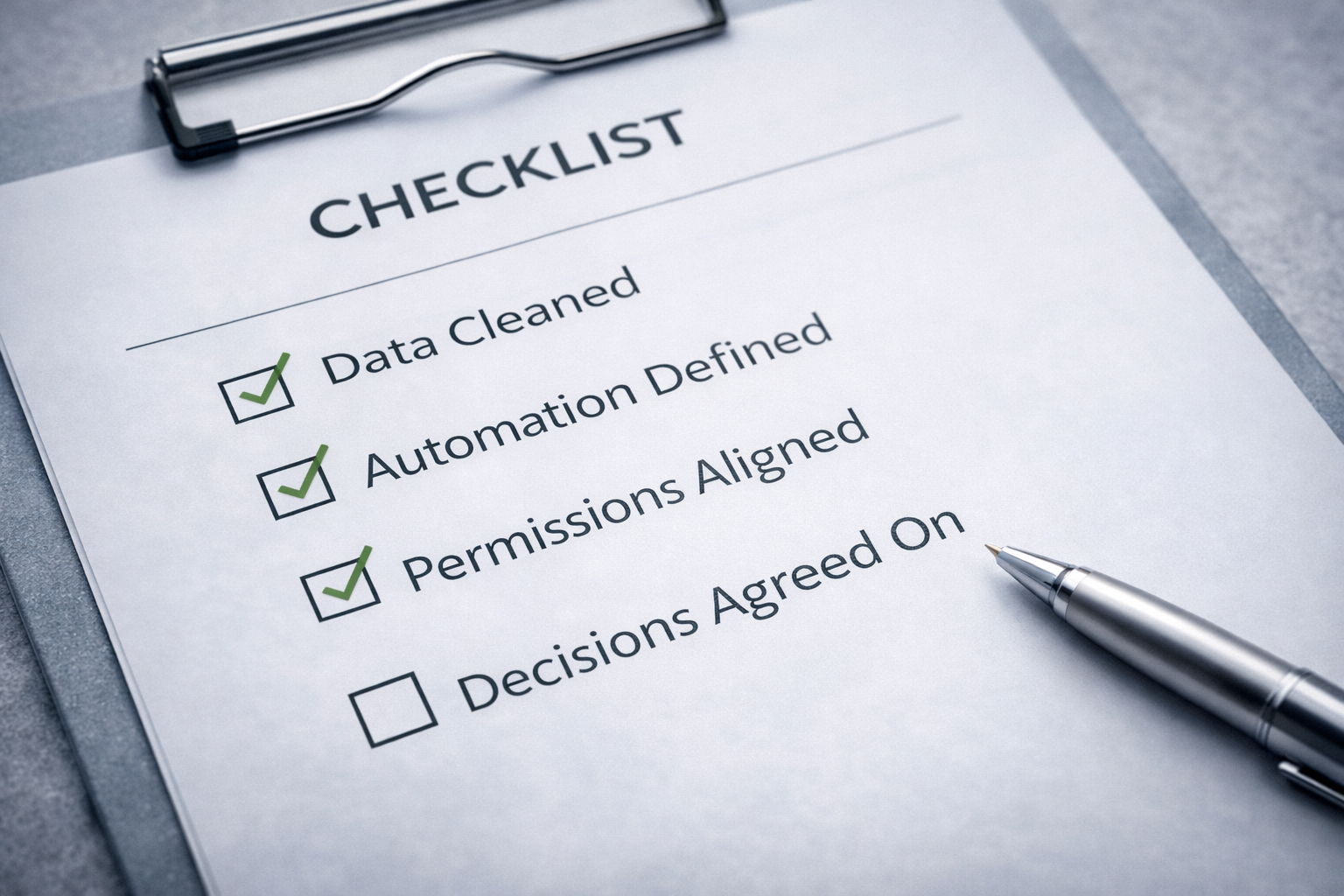
Organizations still need clear architectural standards, automation documentation, release-readiness processes, and scalable platform management practices. Better tools help, but they don't replace thoughtful architecture and disciplined platform management.
Governance, Security, and Integration Risk in Summer ’26
Here’s the thing about governance: most organizations don’t realize they have a governance problem until the platform starts actively resisting them.
At first, weak governance feels manageable. A duplicate Flow here. An undocumented integration there. Maybe someone built six nearly identical validation rules because nobody realized the originals already existed. Then slowly, the Salesforce org becomes harder to maintain. Deployments slow down, automation conflicts multiply, security reviews become painful, and technical debt quietly accumulates in the background.
The Salesforce Summer ’26 Release reinforces something many organizations still underestimate: scalable platform management is becoming a competitive advantage. Weak governance creates hidden costs everywhere. It slows innovation, complicates AI adoption, and turns routine release management into organizational stress testing—often signaling that it's time for a comprehensive Salesforce Org Health Check.
Summer ’26 also continues Salesforce’s broader push toward stronger integration governance, modern authentication management, improved operational visibility, and tighter security architecture across connected systems.
Modern Salesforce environments rarely operate in isolation. Most organizations connect Salesforce to ERP systems, marketing automation platforms, financial software, customer support applications, data warehouses, middleware platforms, and increasingly, AI services. That level of connectivity creates tremendous business value, but it also increases the importance of understanding how systems authenticate, share data, and scale operationally.
That’s why mature organizations are investing more heavily in architecture reviews, integration visibility, automation cleanup, documentation standards, security modernization, and long-term platform sustainability. Not because governance is exciting, but because chaos is expensive.
What Salesforce Admins, Developers, and Executives Should Watch in Summer ’26
Different teams care about different parts of the Salesforce platform, and Summer ’26 is no exception. Admins should focus on automation health, release readiness, user adoption, and platform stability. Developers should prioritize architecture modernization, integration scalability, deployment processes, and long-term maintainability. Executives should focus on governance maturity, AI adoption strategy, operational readiness, security posture, and business outcomes.
Different stakeholders may focus on different features, but successful Summer ’26 preparation ultimately comes down to the same goal: ensuring the platform remains stable, scalable, and aligned with business objectives.
What Organizations Should Absolutely NOT Do During the Salesforce Summer ’26 Release?
Every Salesforce release creates a fascinating category of organizational decision-making best described as: “Well, technically we could do that.” The Salesforce Summer ’26 Release is no exception.
The smartest Salesforce organizations understand that Summer ’26 is not a race to enable features first. It’s an opportunity to modernize responsibly, which is admittedly less exciting than “move fast and break things,” but significantly better for operational continuity.
Salesforce Summer ’26 Release Risks for Highly Customized Salesforce Orgs
Highly customized Salesforce orgs are a little like old houses: they can be incredibly powerful, deeply personalized, and full of impressive craftsmanship. They can also contain wiring decisions from 2016 that nobody fully understands anymore.
The Salesforce Summer ’26 Release increases operational pressure on heavily customized organizations because every new AI capability, automation enhancement, integration update, and security improvement interacts with an increasingly complex architectural foundation.
Organizations carrying large amounts of technical debt should pay particular attention to undocumented Apex logic, overlapping automation, unmanaged package dependencies, legacy integrations, aging authentication frameworks, and custom Lightning components. Highly customized environments often carry significantly higher release risk than organizations operating cleaner, more standardized architectures.
Customization itself is not the problem. Unmanaged customization is. Summer ’26 reinforces the importance of modernization, documentation, and long-term platform sustainability planning before technical debt becomes operational risk.
How the Salesforce Summer ’26 Release Impacts Nonprofit Organizations
Nonprofits experience Salesforce releases differently from large enterprises. While larger organizations may have release managers, architects, development teams, and dedicated QA resources, many nonprofits rely on a single admin balancing Salesforce responsibilities alongside countless other priorities.
That reality makes preparation for Summer ’26 especially important. Nonprofits should pay close attention to donor data security, Salesforce NPSP compatibility, Nonprofit Cloud updates, recurring donation automation, volunteer management workflows, grant reporting accuracy, and third-party fundraising integrations.
Many nonprofit Salesforce environments operate as interconnected ecosystems that combine NPSP, Nonprofit Cloud, accounting platforms, donor engagement tools, volunteer applications, and fundraising automation. Changes in one area can have ripple effects across mission-critical processes.
While Summer ’26 introduces meaningful opportunities for nonprofits, the most successful organizations will focus on balancing innovation with stability to ensure donor experiences, fundraising operations, and constituent engagement remain uninterrupted.

Salesforce Post-Release Monitoring Best Practices After Summer ’26 Goes Live
Here’s something organizations rarely discuss enough: The Salesforce release is not over when production upgrades finish. In many ways, that’s when the real work begins.
The smartest Salesforce teams monitor their environments aggressively after release weekend. They review Flow failures, validate integrations, monitor authentication behavior, confirm dashboard accuracy, review AI-generated outputs, track operational anomalies, and closely monitor support ticket trends, because post-release monitoring is where organizations catch issues that sandbox testing missed.
Every Salesforce admin knows there’s always at least one thing that testing doesn't uncover. Strong post-release monitoring helps organizations identify issues early, minimize disruption, and maintain confidence as new functionality is introduced into production environments.
The Future of Salesforce Releases and AI-Driven CRM Operations
At this point, the direction of Salesforce releases is becoming increasingly clear. Future releases will continue expanding AI, automation orchestration, operational governance, security modernization, integration visibility, and AI-assisted business operations.
The organizations that thrive in this environment will not necessarily be the ones adopting technology the fastest. They’ll be the ones balancing innovation with scalable operations, strong governance, architectural consistency, and long-term maintainability.
Because ultimately, the future of Salesforce isn’t just about AI. It’s about building organizations capable of responsibly managing increasingly intelligent operational systems.
DSG Recommendations for the Salesforce Summer ’26 Release
At DSG, we view Salesforce releases as opportunities to strengthen governance, scalability, and long-term platform health—not simply enable new features. The organizations that get the most value from the Salesforce Summer ’26 Release will prioritize architectural consistency, thoughtful AI adoption, scalable automation, and release readiness. That means understanding integrations, strategically modernizing automation, thoroughly testing in Salesforce sandboxes, documenting the architecture, and treating governance as a business priority rather than a technical afterthought.
The organizations that thrive in the next era of Salesforce won’t necessarily be the fastest. They’ll be the most prepared. When release weekend arrives, prepared organizations rarely experience chaos; they experience evolution. And that’s where releases like the Salesforce Summer ’26 Release become more than software updates—they become opportunities to build smarter organizations.




SHARE