
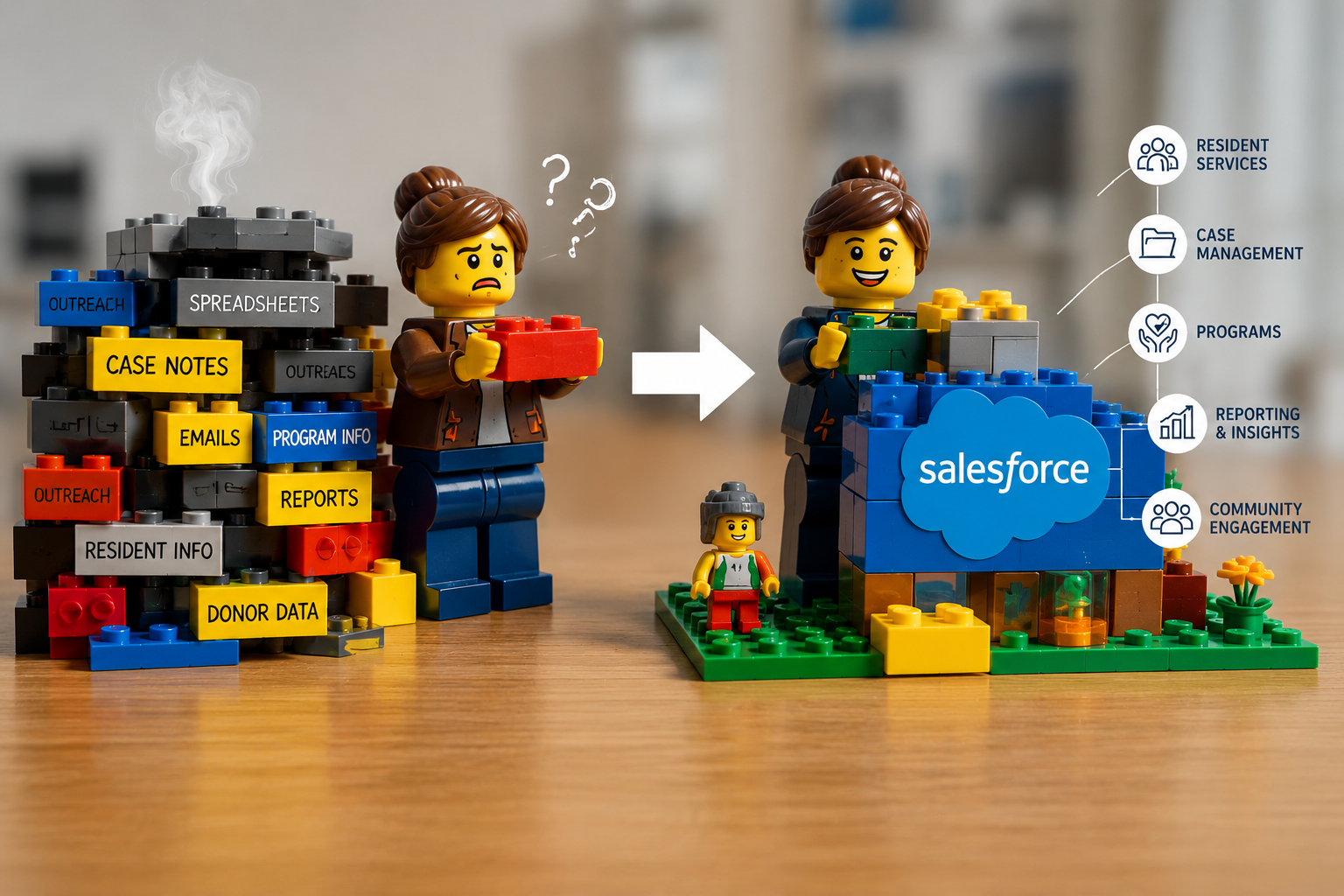
From resident support to community engagement, here's why housing nonprofits are turning to Salesforce to better serve the people who need them most.
The Day Everything Fell Apart
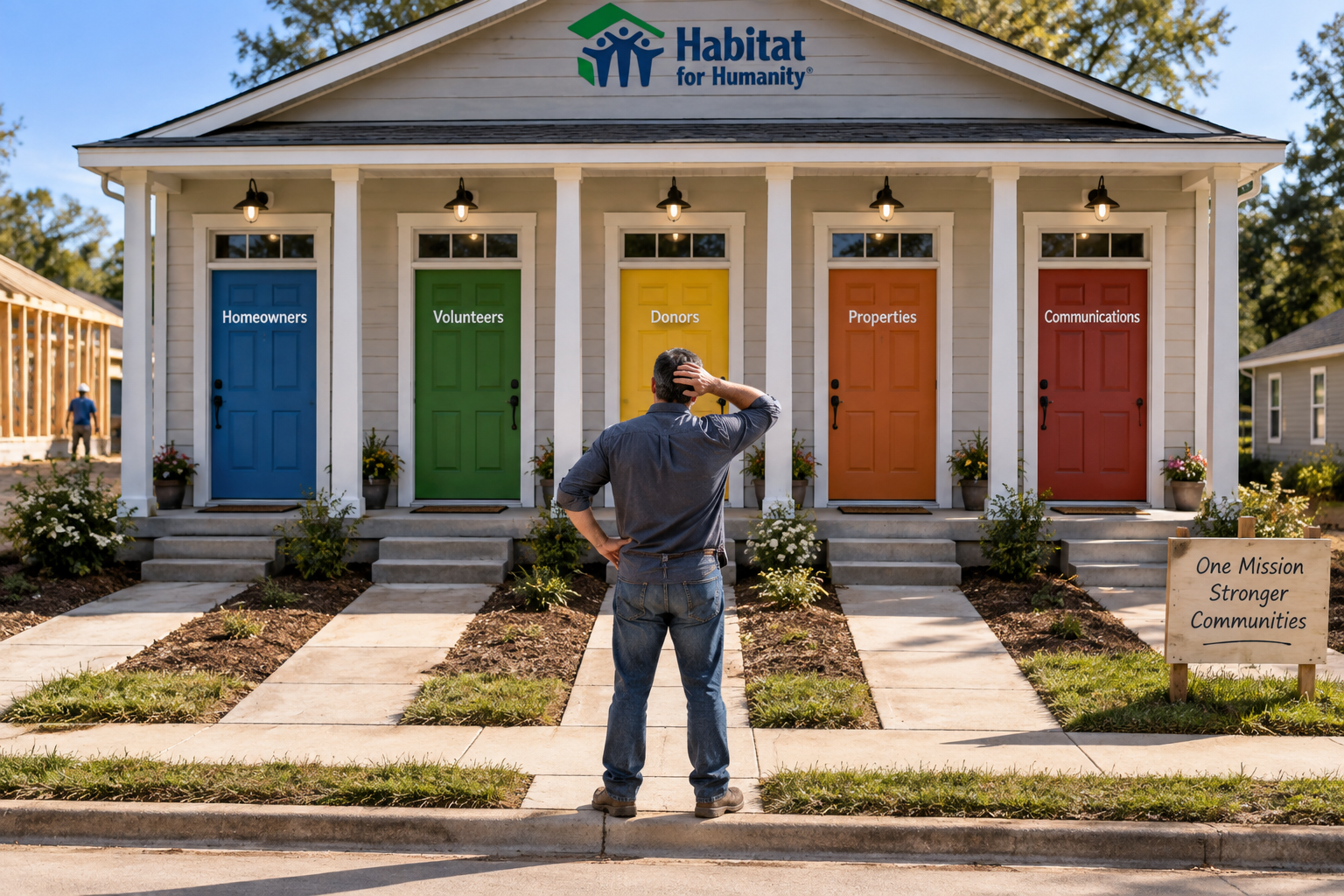
Imagine it's Monday morning, and a resident calls to ask about their after-school program enrollment. At the same time, someone else walks into the office seeking emergency rental assistance, and a case manager is trying to update service records from a community outreach event held over the weekend.
Meanwhile, the executive director is preparing for a board meeting and needs a report showing how many families received services last quarter. The information exists somewhere: some of it is in spreadsheets, some in email threads, and a few notes live in a shared drive folder. But what about the rest? Well, everyone hopes Linda from resident services remembers where it is.
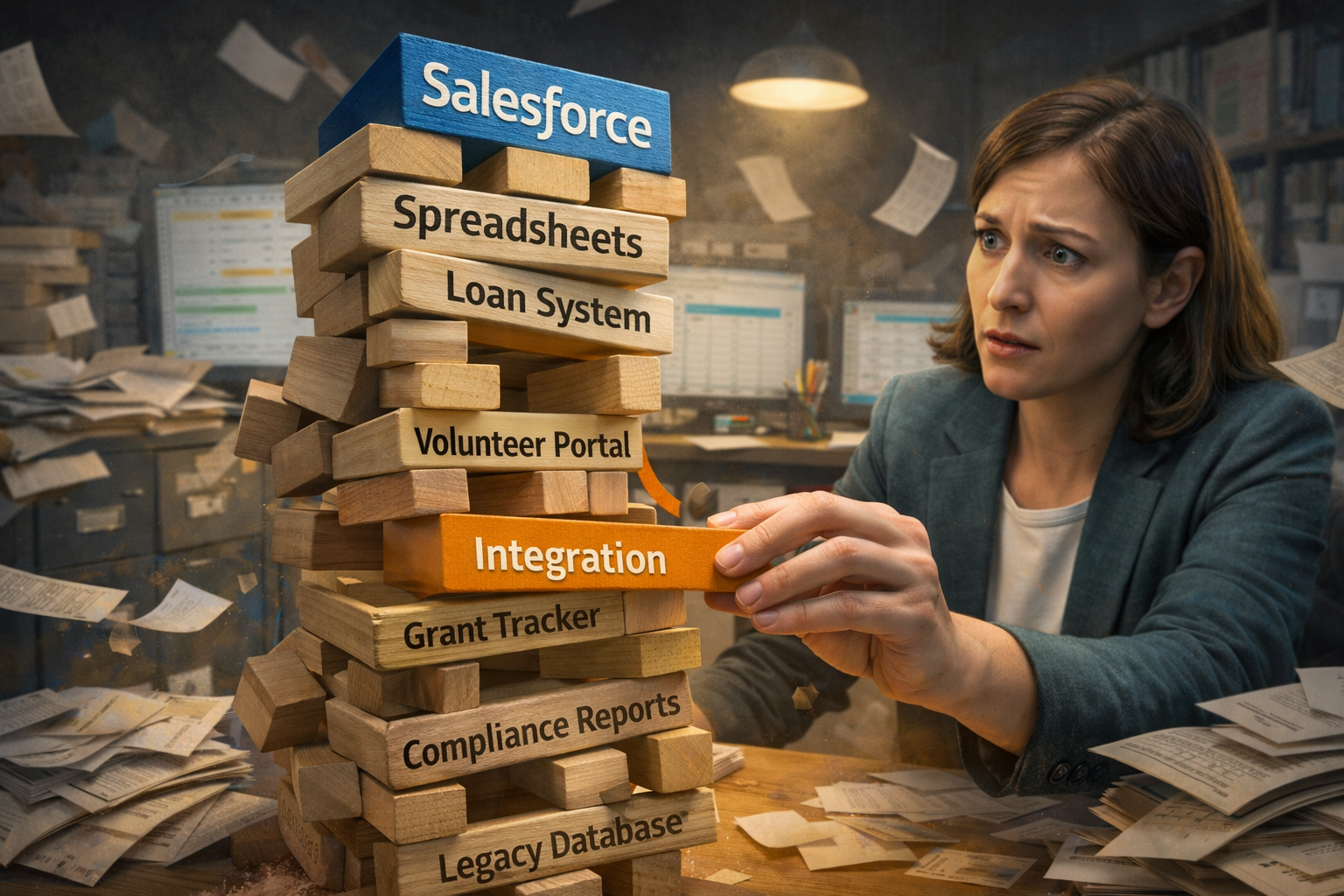
If this scenario sounds familiar, you're not alone. Many housing nonprofits start with good intentions and simple tools. As programs grow, funding expands, and resident needs become more complex, organizations often find themselves managing critical resident information across multiple disconnected systems.
At some point, the organization reaches a crossroads: keep patching together spreadsheets and manual processes, or build a system designed to scale. That is when Salesforce enters the conversation, and increasingly, it's becoming one of the most important technology investments affordable housing organizations can make.
Why Resident Services Are Becoming More Complex
Today, housing nonprofits do far more than provide housing. In many communities, they serve as hubs for education, workforce development, financial literacy, health initiatives, youth programs, senior services, food assistance, and community engagement.
And while that's great news for residents, it's also a massive operational challenge. Every interaction creates data, every program requires tracking, every grant requires reporting, and every resident deserves personalized support. So, the challenge isn't delivering services; it’s keeping track of everything while continuing to deliver them effectively.
Without a centralized platform, staff often spend more time searching for information than using it: case managers duplicate data entry, program directors struggle to measure outcomes, leadership teams lack visibility into program performance, and residents can end up repeating their stories multiple times to multiple staff members. That's not anyone's fault. It's simply what happens when organizations outgrow their systems.
Salesforce for Housing Nonprofits: More Than Just a CRM
When many people hear the word CRM, they think of sales teams chasing leads. In fact, we’ve found that housing nonprofits often assume CRM software isn't relevant to resident services. In reality, Salesforce has evolved into a highly configurable platform that organizations use to support case management, program delivery, resident engagement, reporting, and community services.
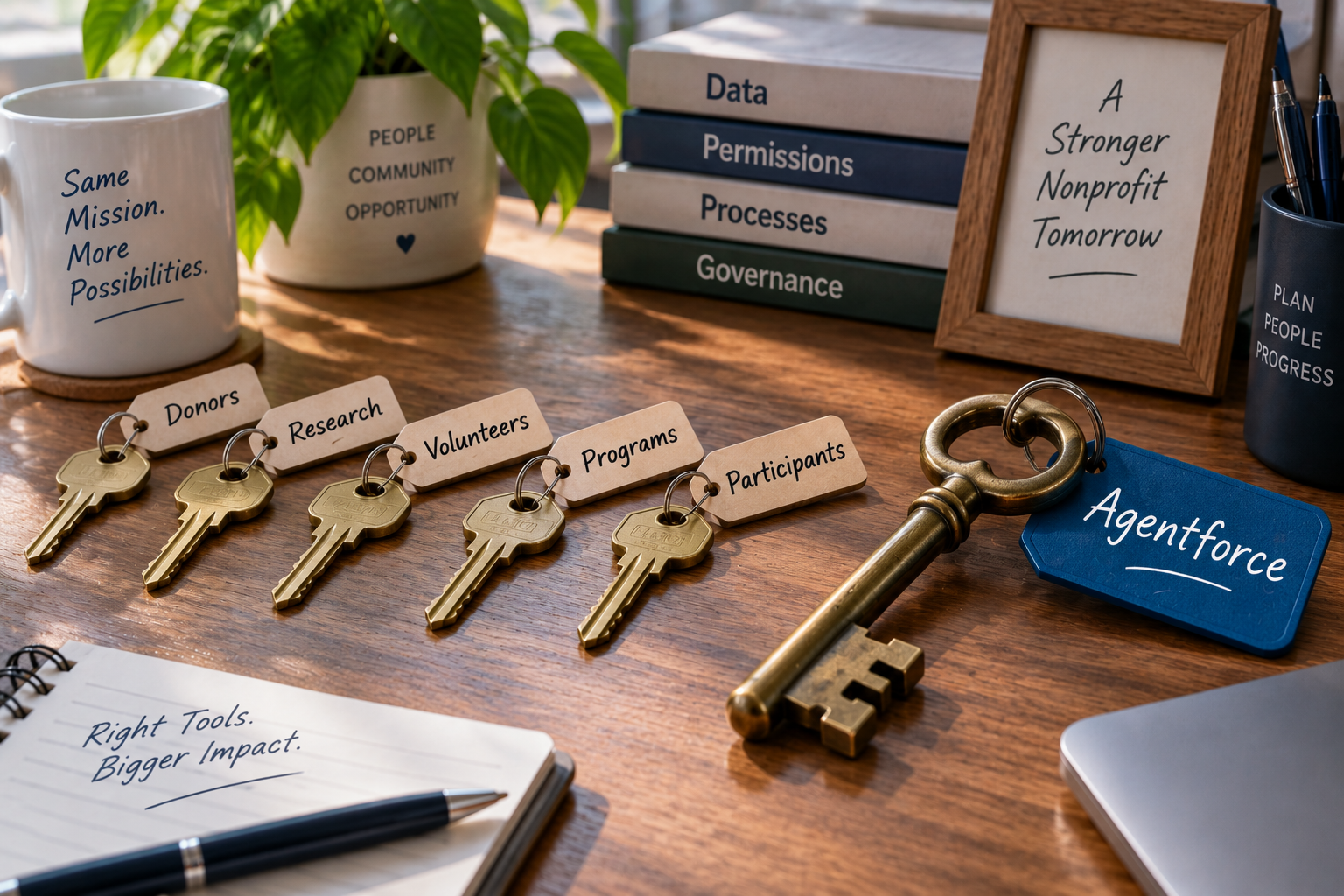
Today, Salesforce Nonprofit Cloud (aka Agentforce Nonprofit) and related Salesforce solutions help organizations manage resident services across multiple programs and departments. Think of Salesforce as a digital headquarters for resident services; instead of information living in separate systems, it can connect through a shared platform.
Resident records, program enrollments, case notes, service requests, communications, volunteer interactions, donor relationships, and outcome measures can work together to provide greater visibility into the services delivered. The result is a more complete understanding of the individuals and families being served, and not just a collection of disconnected records.
Why Spreadsheets Eventually Stop Working for Resident Services
Let's talk about spreadsheets. Not because anyone loves them, but because nearly every housing nonprofit starts there. And honestly? That's perfectly reasonable because when you're serving a handful of residents and running a few programs, spreadsheets can feel like the perfect solution. They're inexpensive, familiar, and flexible enough to get the job done. That is, until they aren't.
It usually happens gradually: one spreadsheet becomes three, three become ten, someone creates a "master" spreadsheet, and then someone else creates a newer master spreadsheet. Soon, staff members are emailing files back and forth with names like: "ResidentServices_Updated_Final_V2_ReallyFinal.xlsx"
At that point, nobody's entirely sure which version is actually correct. The problem isn't the spreadsheet itself, it’s that resident services have become too important—and too complex—to live inside disconnected files.
Spreadsheets aren’t meant to tell a complete resident story. Instead, they’re designed to organize rows and columns. As organizations grow, the gap between those two realities becomes impossible to ignore. That's often the moment when leaders begin exploring a dedicated resident services solution built on platforms like Salesforce (aka Agentic Enterprise). Not because spreadsheets failed, but because the mission outgrew them.
The Hidden Cost of Disconnected Systems
Now, imagine a resident coordinator named Sarah. Sarah receives a call from a resident asking about an upcoming financial literacy workshop. Simple enough, right? To answer the question, Sarah logs into one system to check program registrations, another system to review resident contact information, a shared drive folder to find workshop details, an email thread to confirm attendance, and a spreadsheet to verify transportation assistance eligibility. That’s 5 systems for just one question.
Multiply that by dozens of interactions with residents every day and suddenly, the hidden cost of disconnected systems becomes painfully obvious. The cost isn't measured just in software licenses but also in staff time, frustration, missed opportunities because information wasn't available when needed, and, most importantly, the resident experience.
Residents don't care which department owns which system; they simply expect the organization to know them and understand their needs. When data lives everywhere, that becomes incredibly difficult. Salesforce helps organizations create a connected environment for resident information, communications, service histories, and program participation. The result isn't just operational efficiency. It's a more seamless experience for everyone involved.
The Resident Story: Why Context Matters
Let's meet Maria. Maria moves into affordable housing managed by a nonprofit organization. A few months later, she enrolls in a workforce development program, her children participate in an after-school initiative, and she then attends financial literacy workshops. Eventually, she requests assistance with childcare resources.
Without a modern resident services solution, different staff members might be tracking each interaction separately and not realize they're serving the same family. That could lead to missed program opportunities and fragmented reporting.
Now imagine the same experience using Salesforce. Every interaction becomes part of a broader resident journey: case managers can view participation history, resident coordinators can identify additional services that may help, and leadership can understand how multiple programs contribute to long-term outcomes.
Most importantly, Maria receives a more personalized experience because the staff has a more complete understanding of her journey. That's the real power of Salesforce; not the technology itself, but the context it creates.
How Housing Nonprofits Use Salesforce for Case Management
One of the most common applications of Salesforce in affordable housing organizations is case management. Case managers often juggle dozens—or even hundreds—of active residents, and keeping track of goals, referrals, appointments, documentation, follow-ups, and outcomes can quickly become overwhelming.
Salesforce can be configured to support structured case management workflows. Instead of relying on spreadsheets and personal notes, staff can document interactions in real time. Service plans become easier to manage, tasks get automated, follow-up reminders are generated automatically, and managers gain visibility into caseloads and service delivery performance. The result is greater consistency, improved accountability, and better support for residents.
Salesforce and Property Management Systems: Understanding the Difference
One common misconception is that Salesforce replaces traditional property management software. In most cases, it doesn't. Housing organizations often rely on platforms such as Yardi, MRI, RealPage, or Entrata to manage property operations, leasing, compliance, maintenance requests, and occupancy management.
Salesforce serves a different purpose. Rather than focusing on property administration, Salesforce can help organizations manage resident services, case management, community engagement, program delivery, reporting, and outcome tracking.
For many housing nonprofits, Salesforce complements property management systems by helping connect resident support activities to the broader mission of community impact. The most successful organizations often integrate these systems, so staff have access to the information they need without constantly switching between platforms.
Resident Services Isn't Just Case Management Anymore
Years ago, resident services often focused on a fairly narrow set of activities. Today, that's a completely different story. Modern housing nonprofits have evolved into community anchors. They're helping residents build careers, improve financial stability, access healthcare, support children's education, navigate transportation challenges, and connect with community resources.
Housing organizations aren't simply providing apartments anymore. Instead, they're helping people build better futures, and that means resident services teams need tools capable of supporting a much broader mission. A single resident might participate in workforce development programs, financial coaching sessions, youth enrichment activities, and health initiatives—all within the same organization.
Tracking those interactions separately makes it difficult to understand the overall impact. Tracking them together creates opportunities for deeper engagement and better outcomes. That is where Salesforce becomes especially powerful, because instead of viewing programs as isolated activities, organizations can better understand how services work together to support long-term resident success. And that's a much more meaningful measure of impact.
How Salesforce Simplifies HUD Reporting and Housing Assistance Program Management
If you've ever prepared a grant report, you already know the feeling. The deadline is approaching, and everyone starts hunting for numbers: program managers pull reports, case managers update records, leadership reviews spreadsheets, and someone inevitably asks: "Are we sure these numbers are right?"
For housing nonprofits, reporting requirements continue to grow. Organizations often need to report to HUD, local housing authorities, municipal partners, state agencies, private foundations, and corporate sponsors. Each stakeholder wants data, outcomes, and proof that programs are creating measurable impact.
At the same time, resident services teams are managing multiple housing assistance programs, workforce development initiatives, financial literacy classes, youth programs, and community support services. When information resides across multiple systems, preparing reports can become a full-time job.
Imagine a resident services team that previously spent two weeks compiling quarterly program reports. With resident participation, service delivery, and outcome data already captured in Salesforce, the same reporting process may take hours rather than weeks. That’s because Salesforce can help organizations capture resident interactions, program participation, service delivery records, and outcome measurements in a single platform. And that means less time collecting and validating numbers, and more time understanding what those numbers actually mean.
Then, the conversation shifts from: "Where is the data?" To: "What story is the data telling us about our impact?" And that's a much better place to be.
Improving Resident Engagement Through Connected Experiences
Providing services is only part of the equation. Keeping residents engaged is equally important. Housing nonprofits often coordinate dozens of workshops,
Salesforce can help organizations track event registrations, attendance patterns, communication preferences, and outreach efforts across programs. So, instead of sending generic announcements to everyone, organizations can deliver more relevant communications based on residents' interests and participation history. And to be clear, the goal isn't more communication, it’s better communication.
When housing nonprofits understand how residents engage with services, they can create stronger connections, improve participation rates, and build more vibrant communities.
Data-Driven Decision Making for Housing Organizations
Every nonprofit leader eventually faces a familiar question: "How do we know our programs are working?" It's a simple question, but unfortunately, it's often difficult to answer.
Housing nonprofits collect enormous amounts of information, but information alone doesn't drive better decisions; insights do. Salesforce reporting and dashboard capabilities help leadership teams gain visibility into organizational performance. Which programs are generating the strongest outcomes? Where are residents disengaging? Which services are experiencing the highest demand? How are funding resources getting utilized?
These aren't operational questions; rather, they're strategic questions. And when leaders have access to reliable information, planning becomes more proactive, budgets become more informed, funding requests become more compelling, and program improvements become easier to prioritize. That means organizations can make decisions based on measurable outcomes and demonstrated community impact rather than assumptions.
What Does a Typical Salesforce Implementation Look Like for a Housing Nonprofit?
One of the biggest misconceptions about Salesforce is that implementation requires a massive, disruptive transformation. Many nonprofit leaders picture consultants camping out in conference rooms for six months while everyone else struggles to keep operations running. Fortunately, that's rarely the reality.
At DSG, we often recommend a phased implementation strategy, starting with a Minimum Viable Product (MVP) focused on resident records, case management, and reporting before expanding into automation, resident engagement, integrations, and advanced analytics.
Think of it like renovating a house. You don't need to rebuild everything on day one. Instead, you start with the rooms that pose the biggest challenges, then continue improving from there. The same philosophy applies to Salesforce: small wins build confidence, confidence drives adoption, and adoption creates transformation.
Real Outcomes Housing Nonprofits Can Expect
Whenever organizations consider new technology, the same question eventually comes up. "What's the actual payoff?" And it's a fair question because, after all, software doesn't create impact by itself—people do. But the right technology can remove obstacles that prevent people from doing their best work.
For housing nonprofits, that often means fewer administrative tasks, more time spent serving residents, and residents spending less time repeating their stories. The benefits may seem small individually, but together, they create meaningful change. The ultimate goal isn't operational efficiency for its own sake. Rather, it's creating more capacity to fulfill the organization's mission.
How AI Is Changing Resident Services
A few years ago, conversations about artificial intelligence felt like science fiction. Today, they're happening in nonprofit boardrooms and, increasingly, in the Salesforce ecosystem. AI isn't replacing resident services professionals, and it shouldn't. The human side of resident support will always matter. What AI can do is reduce administrative burden.
Emerging Salesforce AI capabilities can help summarize interactions, recommend next steps, surface trends, and assist staff in managing increasing workloads when implemented as part of a broader resident services strategy. Looking ahead, AI may also help housing organizations identify at-risk residents earlier, surface service gaps across communities, and help staff prioritize outreach efforts based on resident needs and engagement patterns.
Those capabilities are becoming increasingly accessible, and for housing nonprofits facing increasing demand and limited resources, AI may become one of the most valuable tools available; not because it replaces people, but because it helps people focus on the work that matters most.

Why Affordable Housing Organizations Are Investing in Salesforce
The housing landscape continues to evolve. Resident expectations are changing, funding requirements are becoming more demanding, and program complexity continues to grow. To work through those increasing complexities, housing nonprofits need systems that can grow alongside their missions.
That's why many organizations are investing in Salesforce. Not because they need more technology, but because they need better visibility, stronger reporting, improved collaboration, and the ability to scale services without scaling administrative burden. The organizations that thrive over the next decade will be those that can effectively connect people, programs, and information. For many housing nonprofits, Salesforce has become the platform that helps make that possible.
Choosing the Right Salesforce Partner for Housing Nonprofits
Technology is only one part of a successful Salesforce project. Implementation expertise matters just as much. Housing nonprofits have unique operational requirements that differ significantly from traditional fundraising or commercial CRM projects.
Each of those areas influences how Salesforce should be configured and adopted. When evaluating implementation partners, housing organizations should look for teams that take time to understand their mission, operational processes, reporting requirements, and long-term goals before recommending solutions.
That’s because the most successful Salesforce projects aren't built around software features; they're built around organizational outcomes, and that's true regardless of which implementation partner an organization ultimately selects.
The DSG Approach to Salesforce for Resident Services
We understand that housing nonprofits aren't trying to become technology companies—they're trying to serve communities. That's why successful Salesforce implementations begin with people, processes, and outcomes; not software.
Every housing nonprofit has different programs, funding requirements, workflows, and resident engagement models, and a successful implementation reflects those realities. We also believe organizations should avoid over-engineering solutions. Starting with a well-designed MVP and expanding over time often delivers faster value, higher adoption rates, and a stronger long-term return on investment.
Whenever possible, we recommend leveraging Salesforce's standard capabilities through thoughtful configuration before introducing custom development. This approach reduces technical debt, accelerates deployment, and simplifies long-term maintenance. Whether it's configuring Salesforce solutions, building resident services workflows, automating case management processes, creating executive dashboards, or improving reporting capabilities, the objective remains the same: help organizations spend less time managing data and more time creating impact.
Because at the end of the day, resident services aren't about records. They're about people, and when technology helps organizations better serve those people, everyone wins.
Ready to Modernize Your Resident Services Program?
If your housing nonprofit is struggling with disconnected systems, manual reporting, fragmented resident information, or inefficient case management processes, it may be time to evaluate what's possible with Salesforce. The right platform won't solve every challenge overnight. Still, it can provide the foundation needed to scale services, improve resident outcomes, strengthen reporting, and support your mission for years to come.
The future of resident services isn't about collecting more data; it's about making better use of the information organizations already have. Housing nonprofits that can connect resident experiences, program outcomes, and community impact are well-positioned to secure more funding, scale services, and fulfill their mission. Salesforce provides the foundation, and the right strategy turns that foundation into measurable impact.



SHARE