

There’s a moment every nonprofit leader hits—usually somewhere between their third spreadsheet—a missed donor follow-up, and a well-meaning board member asking, “Can’t we just automate this?”
That’s when Salesforce enters the conversation. And right behind it? Confusion. Overwhelm. A dozen tabs open. And eventually, the realization that you might need help.
Not just any help. The right kind of help.
That’s where Nonprofit Salesforce Consultants come in—and more importantly, why choosing the right partner can be the difference between a system that collects dust and one that actually drives your mission forward.
Let’s talk about it.
Why Salesforce Consulting for Nonprofits Isn't Like Regular Consulting
Here’s the thing most vendors won’t tell you: nonprofits don’t operate like businesses. When you’re juggling donors, grants, programs, volunteers, impact metrics—and doing it all with tighter budgets, smaller teams, and higher stakes—every dollar matters. Every inefficiency hurts.
So when someone offers generic Salesforce consulting for nonprofits, it’s worth asking: Do they understand nonprofit operations—or just Salesforce features?
Because there’s a big difference.
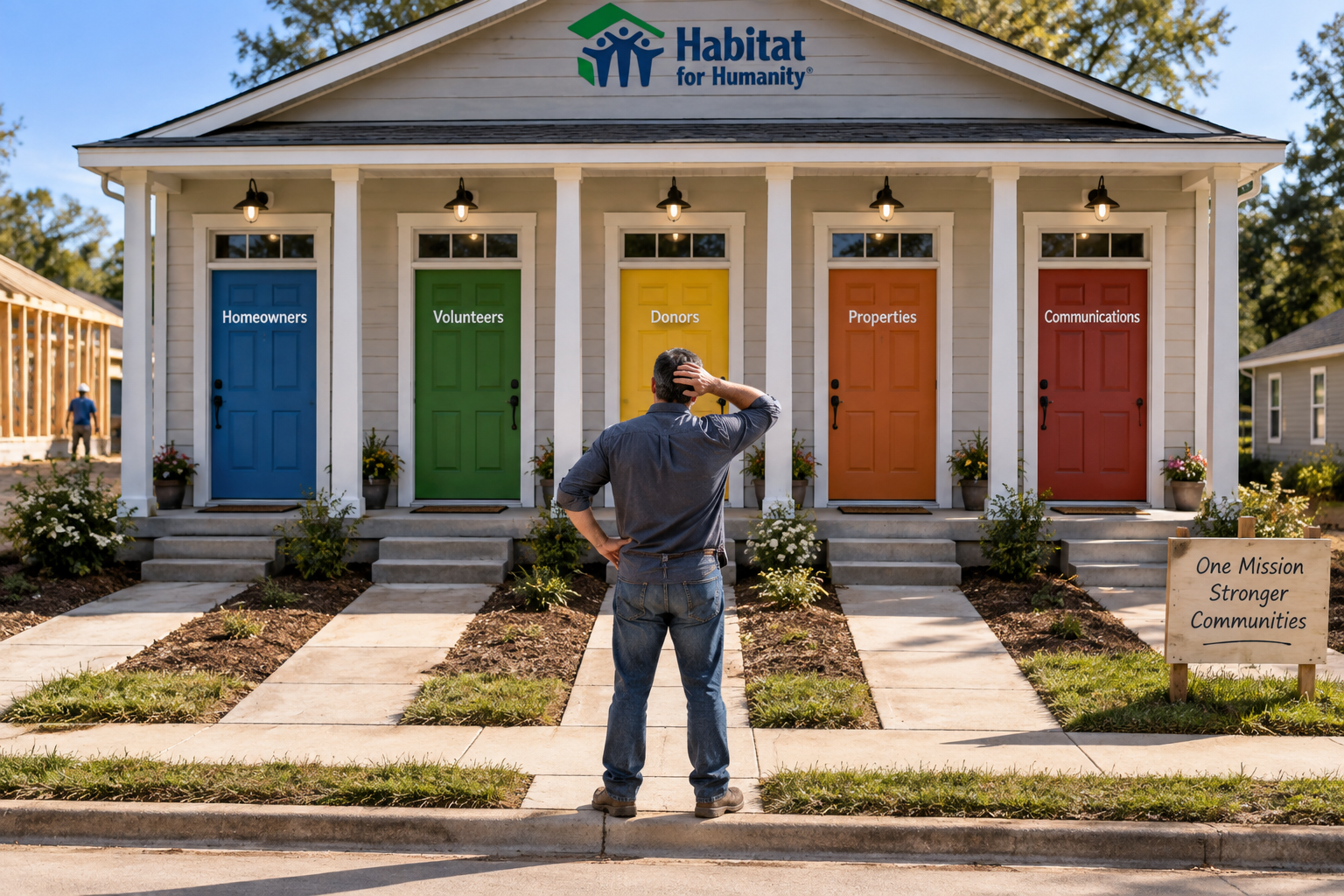
We’ve seen organizations come to us after trying to “make Salesforce fit,” only to realize they needed someone who could make Salesforce work for them, aligning the platform to how they actually track donors, manage programs, report on clients’ impact, and fund their mission.
When Is the Right Time to Bring in a Consultant?
A question we hear all the time: “Are we too early to bring in a consultant, or too late?” The honest answer? Neither.
Some nonprofits come to us before they’ve even purchased Salesforce. Others show up years after implementation, frustrated that things never quite clicked. We’ve worked with organizations at every stage: before kickoff, mid-implementation, post-launch, and years into their use of the system. The common thread isn’t timing, it’s realization.
The realization that implementing and scaling Salesforce successfully requires more than just access to the platform—it requires a clear strategy, the right data model, and a plan for how your team will actually use it day-to-day.
The Implementation Story (And Why It Often Goes Sideways)
Let’s paint a familiar picture. A nonprofit invests in Salesforce, there’s excitement, hope for the future, and maybe even a kickoff meeting with an ambitious timeline.
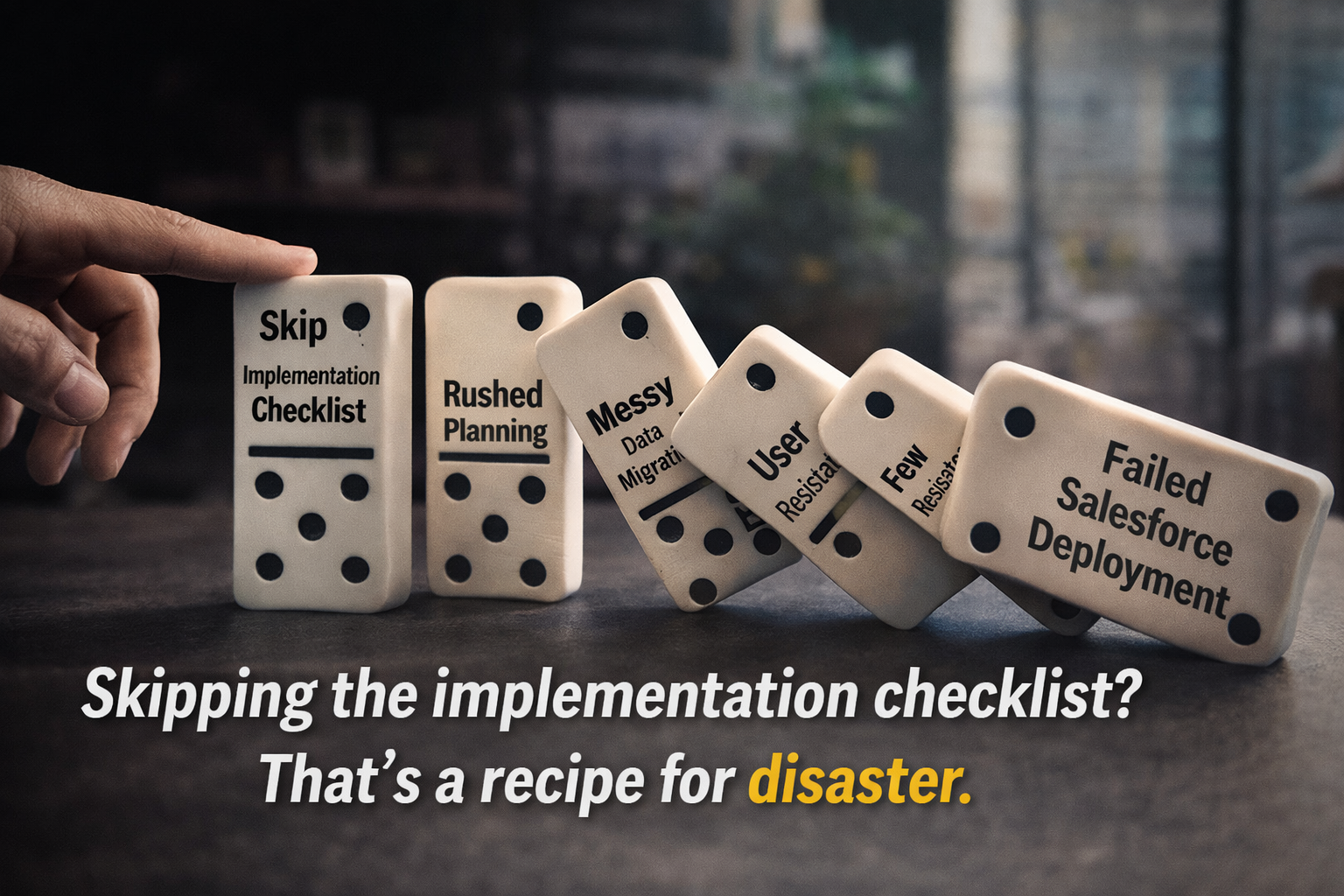
Fast-forward a few months, and the system is technically live but not really working. Reports don’t reflect reality. Staff keeps fallback spreadsheets. Leadership starts questioning the investment. That’s where poorly executed nonprofit Salesforce implementation services reveal their cracks.
The issue isn’t Salesforce; it’s alignment. Implementation isn’t about turning features on; it’s about designing a system that reflects how your organization actually operates. That means understanding how your team uses core objects like Contacts and Accounts, how donations flow through Opportunities, how programs get tracked, and how all of that rolls up into meaningful reporting.
At DSG, we approach implementation as a phased journey. Because success isn’t measured by go-live, it’s measured by whether your team actually uses what’s built, and whether leadership can trust the data coming out of it.
Why These Challenges Happen in the First Place
If that story felt familiar, it’s usually because of a few common patterns we see again and again.
Nonprofits often try to do too much, too quickly, jumping into customization before fully leveraging what Salesforce already offers out of the box. It’s understandable. You want the system to fit perfectly. But overbuilding too early often creates complexity instead of clarity, and technical debt that’s hard to unwind later.
There’s also the tendency to move fast without enough upfront planning. Skipping discovery might save time initially, but it usually leads to rework when reporting doesn’t line up or processes break down.
Another pattern? Treating Salesforce like a static database rather than a system that evolves. Without ownership, governance, and iteration, even strong implementations lose momentum.
And perhaps the most important factor: buy-in. If your team doesn’t understand how Salesforce supports their work, whether that’s fundraising, grant tracking, or program delivery, adoption suffers. And without adoption, even the best system falls flat.
These aren’t failures, they’re growing pains. But they’re also exactly where the right guidance makes all the difference.
Salesforce Nonprofit Cloud Consulting
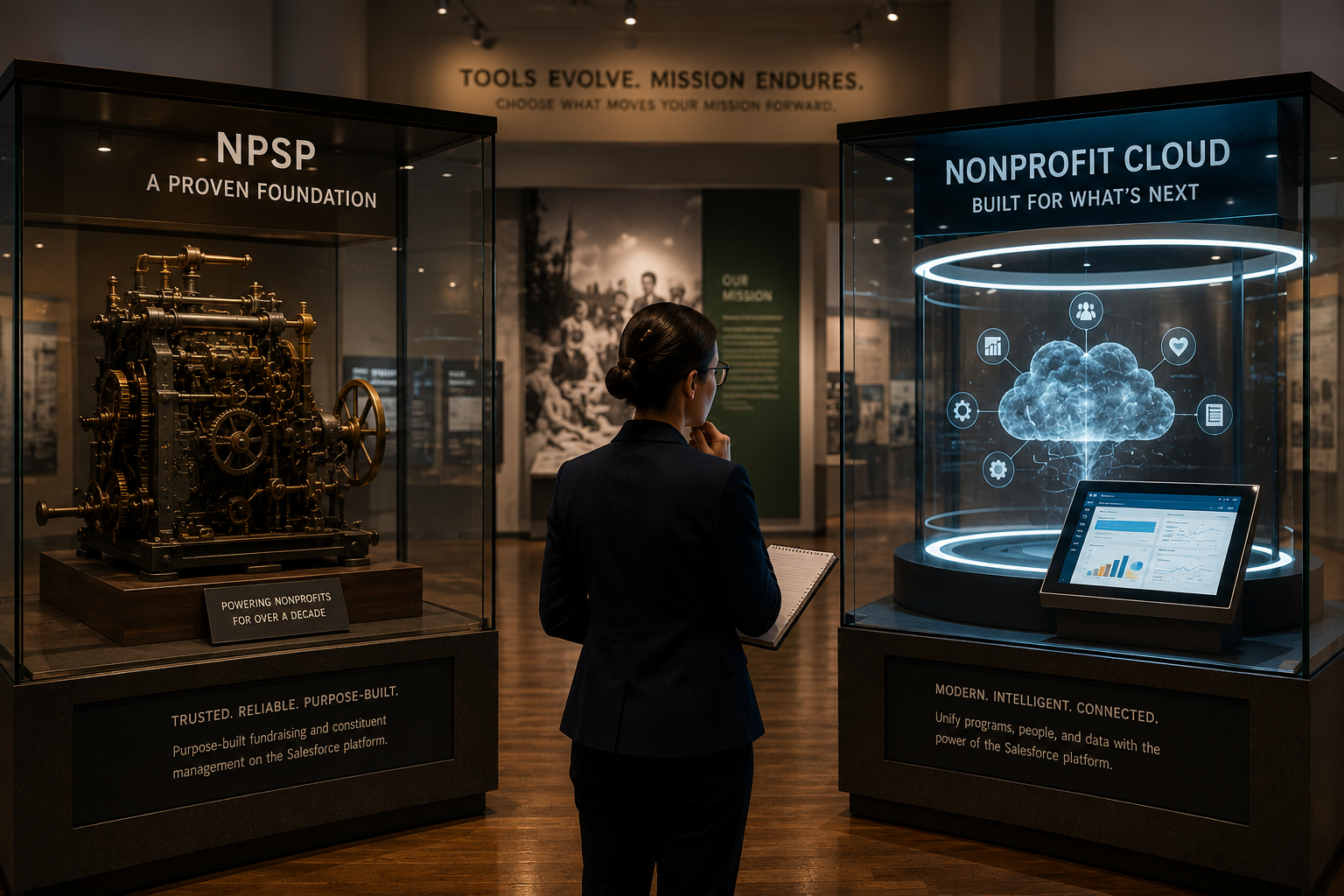
Salesforce is evolving quickly, and nonprofits are feeling the shift. Between the Nonprofit Success Pack (NPSP) and the newer Nonprofit Cloud (aka Agentforce Nonprofit), organizations are now asking a different kind of question: “Which direction should we go?”
There is some discussion in the industry about the proper tools for nonprofits, based on their needs and on features that are in production rather than those planned for future development. That’s where Salesforce nonprofit cloud consulting becomes essential.
For example, some organizations are exploring a move to Nonprofit Cloud, while others are just getting started and want to choose the right foundation (NPSP). And many are simply trying to understand how these platforms differ in the context of their fundraising, program management, and reporting needs.
There’s no universal answer, but there is a right answer for your organization, and it comes from understanding your structure, your goals, and how you define success. It’s also worth noting that while NPSP remains widely used today, Salesforce is continuing to invest heavily in Nonprofit Cloud as its long-term platform. That makes thoughtful planning—and budgeting—even more important than reactive decisions.
Still Using NPSP? You’re Not Behind, You’re in a Different Phase
Let’s clear something up: NPSP isn’t obsolete. In fact, many nonprofits continue to run successfully on it, which is why experienced Salesforce NPSP consultants are still incredibly valuable.
What matters most is whether your current system supports your work effectively, whether your fundraising processes are clear, your donor data is reliable, and your reporting tells the right story. Sometimes that means optimizing NPSP. Sometimes it means planning a thoughtful transition. Either way, the focus should always be on fit, not trends.
When You’re Not Even Sure Salesforce Is the Answer
Here’s something we don’t talk about enough: not every nonprofit is ready to successfully implement Salesforce without the right foundation. Some organizations come to us exploring their options, while others are struggling with a different CRM and trying to figure out their next step. That’s where broader nonprofit CRM consulting services come into play.
Before diving into implementation, we take a step back: What are you trying to achieve? What’s not working today? What would success actually look like across fundraising, programs, and reporting?
Because the smartest move isn’t always doing more; it’s doing what’s right for your organization. And if Salesforce is the answer, we’ll help you determine how to approach it effectively so it actually works for you.
Real Results: What Success Actually Looks Like
Let’s make this tangible. We worked with a nonprofit managing donor data across multiple systems, plus a few spreadsheets “just in case.” Nothing was technically broken, but everything took longer than it should. Reporting required manual effort, donor insights were incomplete, and opportunities were missed; not because of a lack of effort, but a lack of visibility.
After implementing a more intentional Salesforce strategy and layering in the right Salesforce managed services for nonprofits, they didn’t see overnight perfection. Still, over time, meaningful improvements started to take shape.
Reporting became faster and more reliable, data became more consistent, the team began to trust the system and, more importantly, use it. That’s what success looks like. Not perfection—progress.
What Happens After Go-Live (And Why It Matters)
Here’s the part many organizations underestimate: Go-live isn’t the finish line, it’s the beginning. As your organization evolves, your system needs to evolve with it. Let’s face it, new programs emerge, reporting needs shift, and teams change. That is where Salesforce managed services for nonprofits come in.
Managed services aren’t just about fixing issues; they’re about maintaining momentum. They support ongoing enhancements, user enablement, and continuous improvement so your system doesn’t fall behind your organization. Think of it as the difference between simply having a system and having a system that grows with you.
Optimization: Unlocking What You Already Have
While managed services focus on ongoing support, optimization is where we zoom in and make your existing system significantly better. One of the most common things we hear: “We’ve had Salesforce for years, but we’re not using it fully.” We don’t see that as a problem; we see it as potential.
Nonprofit Salesforce optimization is about refining what’s already there: improving automation, cleaning up data, enhancing reporting and dashboards, and simplifying the user experience. Often, the biggest gains don’t come from starting over; they come from aligning your system more closely to how your organization actually operates today.

Let’s Talk Budget (Because We Know It Matters)
Nonprofits operate under real financial constraints, and yet, many get quotes for consulting engagements that feel out of reach. That’s why affordable Salesforce consulting for nonprofits isn’t about being “cheap,” it’s about being intentional.
Affordability means focusing on value, prioritizing high-impact work, phasing strategically, and avoiding unnecessary complexity that drives up long-term costs. The goal isn’t just to build something; it’s to build something you can sustain and grow over time.
How to Choose the Right Nonprofit Salesforce Consultant
By now, it’s clear that choosing a consultant isn’t just a technical decision; it’s also a strategic one. Some consultants will jump straight into building. Others may overcomplicate things in ways that look impressive but are difficult to maintain. The right Nonprofit Salesforce Consultants take a different approach.
They start by understanding your mission, your processes, and your data. They think about how Salesforce will support your fundraising, program delivery, and reporting; not just how they can configure your Salesforce org. And most importantly, they focus on long-term success—not just short-term delivery.
Why DSG Takes a Different Approach
Our philosophy is simple: Salesforce should support your mission, not complicate it. That’s why we focus on phased, MVP-driven implementations, prioritize configuration over unnecessary customization, and care as much about user enablement as we do about system design.
We don’t believe in overwhelming teams with massive rollouts. We believe in building momentum that delivers value early, and then expanding thoughtfully. Moreover, we don’t disappear after launch. Instead, we stay engaged, helping you adapt, improve, and grow as your organization evolves. Your mission doesn’t stand still, and we believe your technology shouldn’t either.
Frequently Asked Questions
If you’ve gotten this far, you probably have a few practical questions swirling about cost, timing, platforms, and what a consultant actually does day-to-day. Fair enough. Let’s tackle some of the most common ones we hear from nonprofits in your exact position.
Q: What does a nonprofit Salesforce consultant do?
A: They help align Salesforce with your organization’s goals, guiding everything from strategy and implementation to optimization and ongoing support.
Q: How much does Salesforce consulting for nonprofits cost?
A: Costs vary depending on scope, but the focus should always be on value, sustainability, and avoiding unnecessary complexity.
Q: Should we use NPSP or Nonprofit Cloud?
A: It depends on your organization’s structure, reporting needs, and long-term goals. A knowledgeable consultant can help you evaluate both options in context.
Q: How long does implementation take?
A: Timelines vary, but phased approaches often deliver value faster while reducing risk and improving adoption.
It’s Not About Salesforce, It’s About Impact
Salesforce is powerful, but for nonprofits, the real question isn’t “What can Salesforce do?” It’s: “What can Salesforce help us do better?”
Reach more people, strengthen donor relationships, operate more efficiently, and demonstrate impact more clearly. That’s what truly matters. And with the right partner—one who understands your mission, your challenges, and how to align technology to both—it’s absolutely achievable.
If you’re somewhere between spreadsheets and a system that really, truly works for you, you don’t have to figure it out alone. Dynamic Specialties Group is here to help you take the next step, no matter where you are in the journey.


SHARE