

Not long ago, most conversations about Salesforce AI for nonprofits eventually arrived at the same party trick: Look, it can write a donor email. Useful? Absolutely. Revolutionary? Maybe not, because the more interesting nonprofit AI conversation in 2026 isn’t really about what AI can write anymore. It’s about what an AI agent can do.
Salesforce Agentforce for nonprofits is increasingly moving into actual operational work: supporting donors, capturing donor interactions, researching prospects, filling volunteer shifts, documenting participant services, creating follow-up tasks, and updating goals. That’s a considerably bigger deal than asking AI to make your annual appeal sound 12% more heartfelt. However, it also raises a more important question: What are you actually prepared to let an AI agent do inside your Salesforce org?
Once AI moves from generating content to taking or assisting with actions involving real records, real donors, real volunteers, and real program participants, the quality of your data, permissions, processes, and governance matters a whole lot more.
Salesforce Agentforce for Nonprofits Is Moving From Novelty to Operations
Salesforce’s nonprofit AI story has changed quickly. Salesforce now markets its nonprofit platform as Agentforce Nonprofit, formerly Nonprofit Cloud, although both names still appear across Salesforce’s product documentation. Within that platform, Salesforce now provides nonprofit-specific agents, subagents, and Agentforce actions spanning fundraising, volunteer management, and program and case management.
Instead of starting from a blank Agent Builder screen and wondering what on earth your nonprofit should automate, organizations can increasingly work with Agentforce capabilities designed around recognizable nonprofit workflows. And that distinction matters.
The difference becomes clearer when you look at the work itself. An AI tool that summarizes a donor meeting can save a development officer time. Still, an agent that helps a donor manage a recurring gift commitment isn’t simply generating content—it’s participating in an actual fundraising process. An AI tool might draft copy to recruit volunteers, while an agent that identifies open shifts and helps match appropriate volunteers is assisting with the work of running a volunteer program. And in program delivery, the distinction becomes even more significant: summarizing case notes is helpful, but helping staff create follow-up tasks, record benefits, prepare referrals, or update participant goals brings the agent closer to the workflows that directly support the people the organization serves.
That’s where Salesforce nonprofit AI starts getting interesting. It’s moving from helping staff produce something to helping them accomplish something.
A quick caveat: “Available today” means these are released Salesforce capabilities—not that every nonprofit Salesforce customer already has access. Availability depends on the organization’s Salesforce edition, Agentforce licensing, enabled Agentforce Nonprofit features, permissions, supporting products, and configuration. Nonprofits using Salesforce NPSP shouldn’t assume these Agentforce capabilities will work with their existing data model or licenses.
Think of these as real, deployable capabilities—not necessarily plug-and-play ones.
So let’s look at five Salesforce nonprofit AI capabilities that show just how far that shift has come.
1. Donor Support Agent: Let Donors Handle the Routine Stuff
Fundraising teams probably didn’t enter the nonprofit world dreaming of spending Tuesday afternoon processing another request to change a recurring donation. Those requests matter, but they also consume staff time that could be spent cultivating relationships, building campaigns, or finding the next major donor.
Salesforce’s Donor Support Agent helps donors manage existing gift commitments through an Experience Cloud site. Depending on configuration, donors can use the agent to pause, resume, close, or change the amount of gift commitments with recurring schedules. Think of it as self-service moving beyond the traditional FAQ. The agent isn’t merely answering, “How do I change my recurring donation?” It can help the donor actually manage that commitment.
For a development team handling hundreds or thousands of recurring donors, that distinction could translate into considerably less routine administration. However, it also illustrates the larger point of nonprofit AI agents: once an agent can interact with fundraising records, getting the underlying data, permissions, and processes right becomes essential.
2. Donor Engagement Agent: Turn the Scribbled Notes Into Something Useful
Anyone who has worked around major gifts knows the problem: a development officer finishes an excellent donor conversation, important details emerge, there are interests to remember, relationships to nurture, promises to follow up on, and perhaps a next conversation to schedule. And then the notes live in a notebook, an email, a Word document, or somebody’s head.
Salesforce’s Donor Engagement Agent addresses that very human problem. It’s designed to take raw relationship notes from major giving officers and turn them into structured interaction summaries and follow-up tasks. If that sounds less futuristic than an autonomous robot fundraiser, good, because the best AI use cases often aren’t futuristic. They’re boring things people already need to do but don’t consistently have enough time to do well.
Capturing donor intelligence more consistently can preserve institutional knowledge, improve continuity between staff members, and make Salesforce better reflect the actual donor relationship instead of the place everyone promises they’ll update later.
3. Philanthropic Research Subagents: Give Fundraisers a Head Start
Prospect research is valuable precisely because it takes work. Fundraisers may need to understand giving history, philanthropic interests, wealth indicators, significant milestones, professional affiliations, and other information before deciding how—or whether—to approach a potential donor.
Salesforce’s Philanthropic Research subagents support that process within Agentforce. Depending on configuration and available grounding data, these subagents can help work with philanthropic research records, answer questions about prospects, summarize philanthropic milestones and wealth capacity, and organize relevant information available to the organization. And the important word here is support.
This isn’t a reason to hand your fundraising strategy to an algorithm and head to lunch. Research still needs context, fundraisers still need judgment, and humans still need to understand relationships that don’t fit neatly into database fields. But an agent that can reduce the amount of time spent gathering, organizing, and summarizing information can give development professionals more time for the part machines aren’t particularly good at: building genuine human relationships.
And another lesson is hiding here: Agentforce is only as useful as the information it can reliably ground its responses in, which means the shiny new AI capability may quickly uncover the same problem your staff has complained about for years: your data.

4. Volunteer Management Agent: Identify Coverage Gaps and Potential Matches
It’s 4:37 p.m. on Thursday. Saturday’s event is approaching. Three volunteer shifts are still open, one volunteer can only work mornings, another has the right skills but is unavailable, and somebody else changed their availability and forgot to tell anyone. Welcome to volunteer coordination.
Salesforce’s Volunteer Management Agent includes a Shift Capacity and Coverage subagent that can identify unfilled volunteer shifts and help find appropriately suited volunteers based on factors such as availability, skills, and location. That’s a wonderfully practical Salesforce Agentforce use case because it addresses a recognizable operational problem rather than inventing a new one for AI to solve.
Instead of manually searching records and comparing availability, skills, location, and other relevant information one person at a time, a volunteer manager can use Agentforce to help surface coverage gaps and identify potential matches. But the human still matters. One volunteer may be technically qualified but a terrible fit for this particular event. Salesforce may not know the context. That said, reducing the administrative scavenger hunt gives staff more time to manage and engage volunteers, and that’s the kind of AI ROI nonprofits should be looking for.
5. Participant Management Agent: Where Agentforce Gets Much Closer to the Mission
For many nonprofits—and particularly human services and housing organizations—this may be the most consequential example. Salesforce’s Participant Management Agent is designed to help case managers and program staff with administrative work surrounding service delivery. Its capabilities can include preparing participant summaries and notes, creating tasks and referrals, recording benefits and benefit disbursements, and updating participant goals.
Consider what that could mean for a housing nonprofit.
Used appropriately, Agentforce can help reduce some of that administrative friction, and that’s exactly why the conversation about AI for nonprofits needs to become more serious.
There’s a pattern here. As you move through these examples, Agentforce gets progressively closer to the work that actually runs the organization. Summarizing donor notes is one thing. Helping fill a volunteer shift is another. Managing a donor commitment or updating information connected to participant services raises the stakes again. And as the consequences of an agent’s actions increase, so should the scrutiny around the data, permissions, guardrails, and human oversight behind it.
How Salesforce AI Agents Are Changing Nonprofit Operations
Suppose generative AI drafts a mediocre donor email. Someone reads it, decides the opening sounds like it was written by an overly enthusiastic toaster, fixes it, and moves on. Now suppose a Salesforce AI agent interacts with a donor’s recurring gift commitment, creates a task associated with a participant, or helps update a participant goal. Those are fundamentally different categories of AI use.
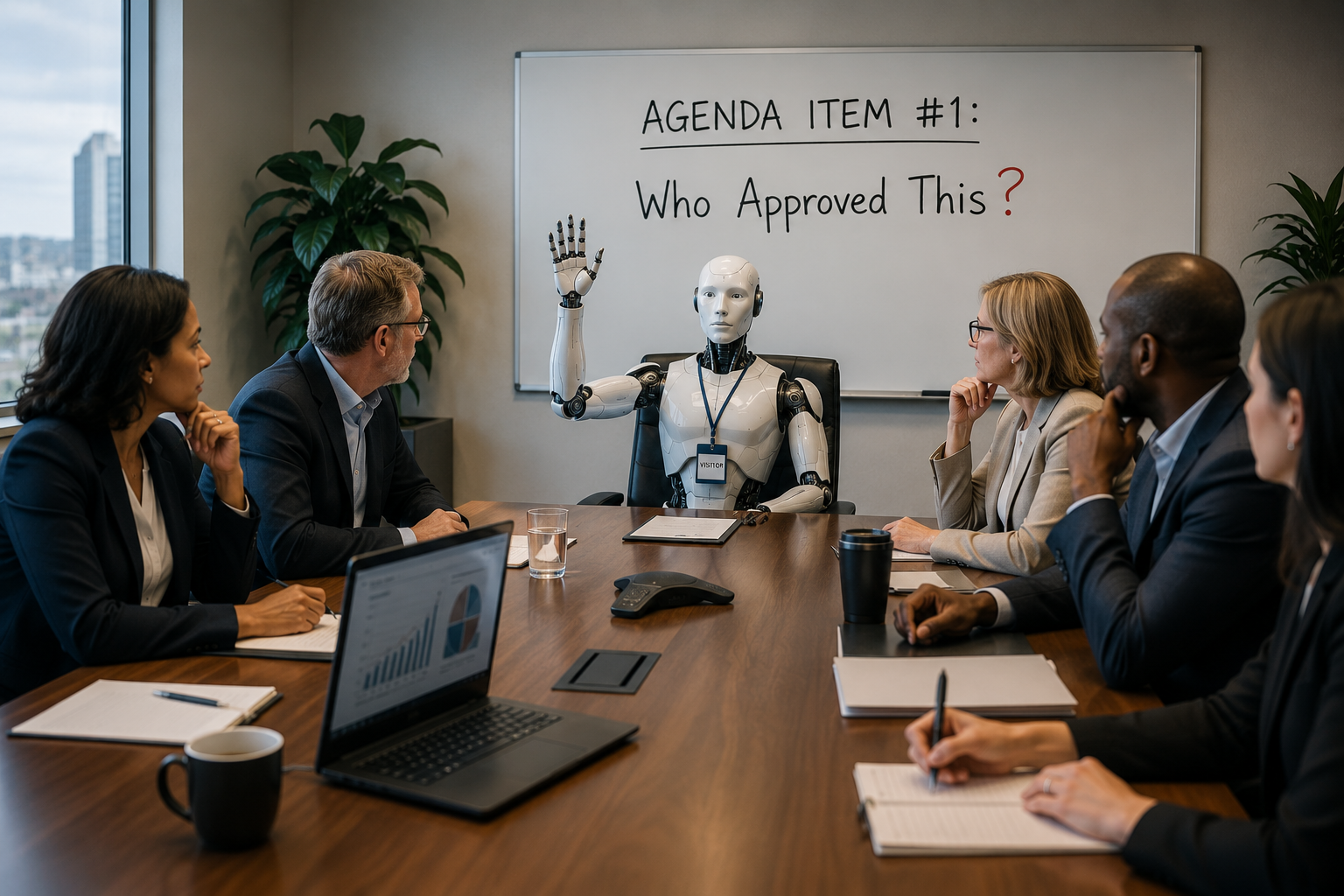
As agents move closer to nonprofit operations, the question isn’t simply whether the output sounds good. You have to consider whether the agent has access to the right information, whether that information is accurate, what actions it’s allowed to perform, what requires human review, and what happens when something goes wrong.
In other words, Salesforce Agentforce implementation increasingly becomes a Salesforce architecture and AI governance conversation.
Is Your Nonprofit Ready for Salesforce Agentforce?
Here’s the uncomfortable part: Agentforce doesn’t magically repair a messy Salesforce org. If your organization has duplicate constituent records, inconsistent data entry, outdated processes, overly broad permissions, poorly understood automations, or fields nobody has reliably populated since 2019, adding an AI agent doesn’t make those problems disappear. In fact, it can make them more important.
Agentforce readiness starts with the Salesforce foundation underneath the agent. An agent needs reliable grounding, appropriate access, and actions that fit the organization’s actual processes. Moreover, deploying nonprofit Agentforce capabilities can require the right licensing, permissions, enabled features, configuration, and testing. That means organizations should ask some decidedly unglamorous questions before racing toward the glamorous technology.
- Is the data the agent will rely on trustworthy?
- Does the agent have access only to the objects and fields it actually needs?
- Which actions can it perform, and which should require human involvement?
- Are the underlying Salesforce workflows standardized enough that an agent can interact with them reliably?
- Can your team review what the agent has done and understand the result?
- And perhaps most importantly: What happens when the agent is wrong?
Those aren’t arguments against Agentforce; they’re what responsible AI governance for nonprofits looks like.
How Nonprofits Should Start With Agentforce
Whenever an exciting new Salesforce product arrives, it's tempting to start with the technology. We have Agentforce. What should we make it do? We suggest reversing that question.
What repetitive, well-defined task consumes staff time today? Where does that task already rely on Salesforce data? Is the process consistent? Are the consequences of an error understood? Can a human easily review or intervene when necessary? And if the agent handles or assists with that task successfully, what does your organization get back—staff hours, faster service, better documentation, fewer dropped follow-ups, stronger donor engagement?
That gives you an actual use case instead of an AI demonstration. Maybe the right first Agentforce project isn’t your most ambitious workflow. Maybe it’s identifying unfilled volunteer shifts, turning donor meeting notes into follow-up tasks, or helping staff prepare participant summaries before meetings.
In other words, start somewhere measurable, learn how the agent behaves, improve the data and process around it, and establish governance. Only then should you decide whether the next use case should carry more responsibility.
When Your Nonprofit Isn’t Ready for Agentforce Yet
Not every nonprofit needs five of these Agentforce capabilities to work tomorrow morning. Some organizations may discover they’re ready for Agentforce. In contrast, others may find their first Salesforce Agentforce implementation project is actually a data cleanup project, a permissions review, or a Salesforce process redesign wearing an AI hat.
That’s useful information because the goal isn’t to deploy an agent just to say you deployed an agent. Rather, the goal is to reduce administrative work, improve constituent experiences, help staff operate more effectively, and ultimately create more capacity for the mission. The bottom line is: if the foundation isn’t ready, fix the foundation. Agentforce will still be there when you’re finished.
What Salesforce Agentforce Means for the Future of Nonprofit AI
For years, generative AI trained us to think about artificial intelligence primarily in terms of output: write this, summarize that, draft this email, rewrite this paragraph, or make this sound friendlier. Agentforce represents something different.
The emerging Salesforce AI for nonprofits use cases are about work: managing donor commitments, preserving relationship intelligence, supporting philanthropic research, filling volunteer shifts, and helping program staff document and coordinate participant services. That’s why the next phase of nonprofit AI will require more than clever prompts. It will require strong Salesforce architecture, clean, well-governed data, thoughtful permissions, clear processes, human oversight, rigorous testing, and an honest understanding of which decisions and actions your organization is—or isn’t—ready to delegate to an agent.
The most important question may no longer be, “What can Agentforce do?” Instead, it’s becoming: “What are we ready to let it do?” And if you’re not sure of the answer, that’s probably the right place to start.
Dynamic Specialties Group helps nonprofits evaluate, configure, and improve Salesforce environments so capabilities like Agentforce are built on a foundation that can actually support them. Before beginning a Salesforce Agentforce implementation, we can help you determine whether your data, permissions, processes, governance, and Salesforce architecture are ready for what comes next. Talk to a Salesforce Expert.
Product information last reviewed: September 2026. Salesforce Agentforce features, licensing, terminology, and availability can change. Consult current Salesforce documentation (Salesforce Agentforce for Nonprofits) when evaluating Agentforce capabilities for your organization.




SHARE