
Let’s start with a scene. You’re in a meeting. Someone says, “We’re using Sales Cloud, Service Cloud, and Marketing Cloud.” Another person nods. A third person asks, “Wait… which cloud does what again?”
And then—because this is Salesforce—someone inevitably says, “Well, it depends.”
Now fast forward. Same meeting. Same company. But this time someone says, “We’re rolling out Salesforce Agentforce across the business.” Everyone pauses.
Not because it’s confusing, but because it sounds like something big just happened. And that’s exactly the point.
Why Did Salesforce Rename Its “Cloud” Products to Salesforce Agentforce?
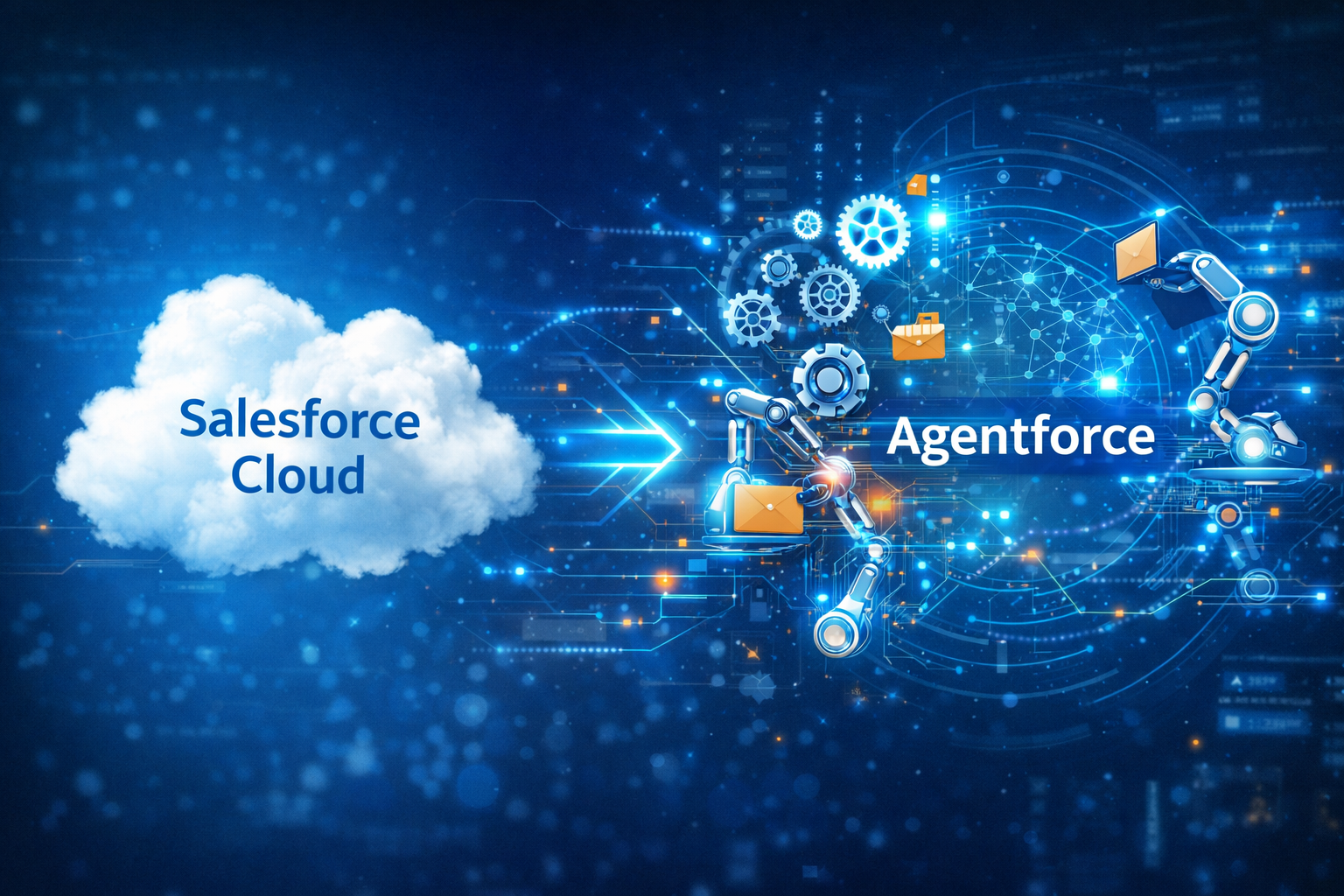
Salesforce didn’t wake up one morning and decide “Cloud” felt outdated. It wasn’t a branding whim; it was a signal. For years, Salesforce Cloud products were about storing data, managing workflows, and helping humans do their jobs better. Now? Salesforce is betting on something bigger: AI-driven, autonomous assistance.
Enter the idea of the Agentic Enterprise.
Instead of just giving users tools, Salesforce is building systems in which AI agents actively participate in work—handling tasks, making recommendations, and, in some cases, acting independently within defined guardrails.
“Cloud” implies infrastructure. “Agentforce” implies action. That’s the shift.
Salesforce Sales Cloud, Service Cloud, and More: What Changed with Salesforce Agentforce?
Let’s clear up what actually changed, because this is where things can get fuzzy. Salesforce didn’t just rename every product and call it a day. Instead, it introduced a broader concept: Agentforce 360.
Think of Agentforce 360 as the umbrella. It brings together apps, data, AI, and automation into one cohesive platform experience. Within that:
- What we’ve known as Salesforce Sales Cloud is now positioned as Agentforce Sales
- Salesforce Service Cloud becomes Agentforce Service
- Salesforce Marketing Cloud becomes Agentforce Marketing
- Salesforce Commerce Cloud becomes Agentforce Commerce
- Salesforce Nonprofit Cloud becomes Agentforce Nonprofit
But here’s the important nuance. Customer 360 didn’t disappear. Instead, it still exists as the application layer—now sitting within the broader Agentforce 360 model.
And behind it all? Data Cloud has officially been rebranded as Data 360, serving as the real-time data foundation powering everything. So yes—names evolved. But more importantly, Salesforce reorganized how everything fits together.

What Salesforce Agentforce Actually Looks Like in Practice (Beyond the Buzzwords)
Up to this point, everything sounds conceptual: AI, agents, automation. It’s a big shift. But what does that actually look like?
Picture this. A sales rep logs in, and their pipeline isn’t just sitting there; it’s already been analyzed, deals are prioritized, next steps are suggested, and draft emails are waiting.
A service team opens its queue, and a portion of cases are already categorized, routed, or even resolved before anyone clicks into them.
A marketer launches a campaign, and instead of “set it and forget it,” the audience, messaging, and timing continuously adjust based on real-time engagement.
Before, Salesforce helped you manage work. Now, Salesforce Agentforce is designed to move work forward alongside you. And tying it all together is Agentforce 360, powered by Data 360, ensuring every interaction—human or AI—is grounded in unified, real-time data.
Is Salesforce Agentforce Just a Rebrand of Salesforce Cloud—or a Real Platform Shift?
Let’s address the question everyone’s quietly asking. Is this actually different or just better marketing? The honest answer is a little of both, and that’s what makes it important.
At its core, Salesforce is still Salesforce. Your objects, your automations, your configurations, they’re all still there. But what’s changed is how the platform behaves. AI is no longer an add-on; it’s embedded. Automation is no longer optional; it’s becoming expected. And Data 360 isn’t just about reporting; it’s about enabling real-time decisions.
So no, you’re not starting over, but you are stepping into a different operating model. One where systems don’t just store information, they help act on it.
What Salesforce Agentforce Means for Existing Salesforce Sales Cloud and Service Cloud Customers

Salesforce is building toward a future where Agentforce capabilities become more embedded and more standard across the platform. Which means the real question isn’t: “Do I need to change today?”
It’s: “How do I start preparing my org so I can actually take advantage of what’s coming?” Because the organizations that benefit most won’t be the ones who wait, they’ll be the ones who prepare.
Common Misconceptions About Salesforce Agentforce (And What’s Actually True)
There’s already a lot of noise around Salesforce Agentforce, so let’s simplify a few things.
It’s not here to replace your team. Rather, it’s here to support and accelerate them. It doesn’t require a full rebuild of your Salesforce org, but it may require rethinking how that org is structured over time. And it definitely won’t fix poor data quality on its own. If anything, it will highlight those issues faster.
That isn’t just a rebrand. It’s a shift toward systems that assist, recommend, and act alongside your team.
From Salesforce Nonprofit Success Pack (NPSP) to Salesforce Nonprofit Cloud to Agentforce Nonprofit
If you’ve been in the nonprofit world for a while, this evolution probably feels familiar. First came the Salesforce Nonprofit Success Pack (NPSP), a flexible, widely adopted solution built on top of Salesforce Sales Cloud. Then came Salesforce Nonprofit Cloud, offering a more modern, industry-aligned approach.
Now, with Salesforce Agentforce, we’re seeing the next step. Not just better tools, but smarter systems designed to support how nonprofit teams actually work.
How Salesforce Agentforce Impacts Nonprofits—Especially Housing Organizations
Let’s make this real. A case manager at a housing nonprofit starts their day juggling dozens of clients, tracking housing placements, managing compliance, and updating multiple systems. And somewhere in that chaos, they’re supposed to actually help people.
This is where Salesforce Agentforce starts to make a difference. AI can help summarize client histories, suggest next steps, and assist with follow-ups and documentation. Instead of digging through records, caseworkers can spend more time acting on them. With Data 360, information becomes more unified, giving teams a clearer view across programs, clients, and outcomes.
For housing nonprofits, this doesn’t magically solve every challenge, but it does create an opportunity for something meaningful: less time spent navigating systems and more time serving people.
What’s Now Free in Salesforce Agentforce (And Which Customers Benefit Most)
Here’s one of the more practical—and often overlooked—parts of this shift. Salesforce is making more functionality accessible, but not in a one-size-fits-all way.
For many existing customers, Salesforce has introduced Salesforce Foundations, a free upgrade available on certain editions. It brings together features across Sales, Service, Marketing, Commerce, Data 360, and Agentforce, giving organizations a starting point for adoption without additional licensing costs.
At the same time, nonprofits continue to benefit through programs like Power of Us, which can include free licenses and access to core platform capabilities. Salesforce has also introduced access to Agentforce Nonprofit for eligible organizations as part of this broader support model.
So while not everything is “free,” the barrier to entry is clearly being lowered, especially for nonprofits and existing Salesforce customers.
Why Salesforce Agentforce Makes Strategy More Important Than Ever (Especially for Growing Orgs)
Here’s the part that doesn’t get talked about enough. Salesforce Agentforce doesn’t simplify Salesforce. It raises the stakes. Because now it’s not just about building something that works; it’s about building something that works intelligently.
Your data needs to be usable, your processes need to be intentional, and your system needs to evolve without breaking every time something new is introduced. And this is where many organizations hit a wall. That’s because turning on AI is easy, but designing a system where AI actually improves outcomes? That takes strategy.
The Future of Salesforce Agentforce, Agentforce 360, and the Agentic Enterprise
If you follow this trajectory forward, things get even more interesting. We’re moving toward a world where AI agents don’t just assist. Instead, they handle larger portions of workflows. Systems communicate across departments more seamlessly. Organizations shift from reactive reporting to more proactive, data-driven decisions.
For nonprofits, that could mean identifying trends earlier and responding faster. For businesses, it could mean acting on opportunities before they’re obvious. That’s the vision behind the Agentic Enterprise, and it’s exactly why Salesforce made this shift.
Quick Recap: Salesforce Cloud vs. Salesforce Agentforce, Customer 360 vs. Agentforce 360, and the Role of Data 360
Salesforce didn’t eliminate its products; it reorganized and evolved them. Salesforce Sales Cloud, Service Cloud, Marketing Cloud, Commerce Cloud, and Salesforce Nonprofit Cloud are now positioned within the broader Salesforce Agentforce ecosystem.
Agentforce 360 acts as the umbrella. Customer 360 remains the application layer within it. Data 360 powers everything behind the scenes.
And the platform itself? It’s moving from something you manage to something that helps you move work forward.
Final Thoughts on Salesforce Agentforce and the Shift from Salesforce Cloud to an Agentic Enterprise
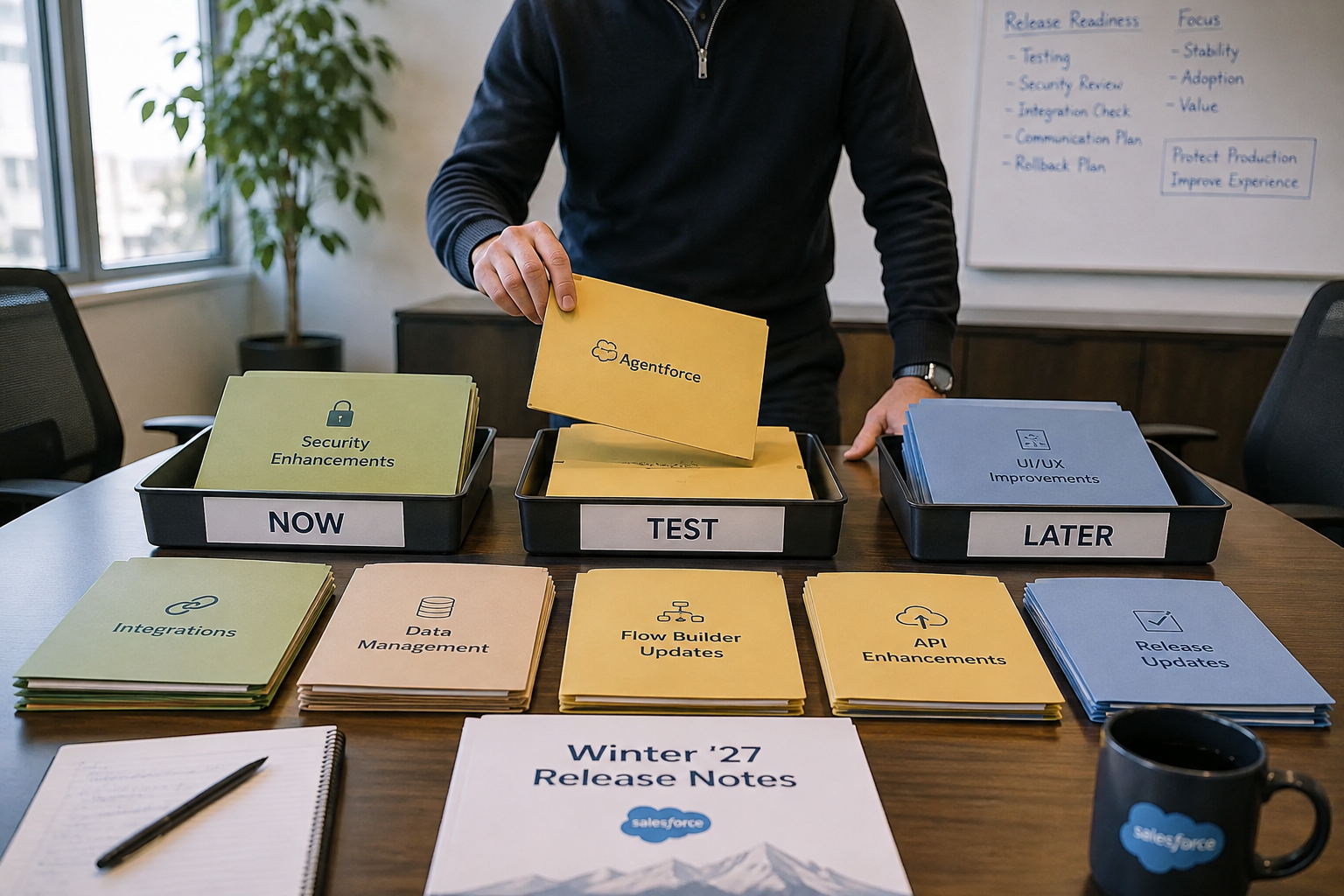
This wasn’t just a rename. It was a repositioning. Salesforce is evolving from a system you log into to a system that works alongside you—and increasingly, helps guide what happens next. So the real question isn’t whether Salesforce Agentforce is coming. It’s whether your organization is ready to work with it.





SHARE